Pricing Liquor Effectively
Pricing liquor effectively requires more than intuition; it involves balancing cost management, customer expectations, and competitive positioning. Bars and restaurants must consider factors such as pour size, product tiers, market positioning, and customer demographics, while leveraging technology like digital menu software to optimize pricing strategies and increase profitability.
Bar Owners See Evergreen’s Digital Menu Software in Action
Join 4,500+ restaurants, bars, and breweries using Evergreen to modernize their menus.
Understanding how liquor prices are set depends on multiple variables and sometimes exceptions. For instance, pricing tactics may vary significantly between high-volume urban bars versus boutique craft cocktail lounges. Additionally, promotional events like happy hours impact pour costs and margin calculations differently depending on clientele and inventory. These nuances underscore that pricing decisions are not one-size-fits-all, but rather depend on business goals and operational data.
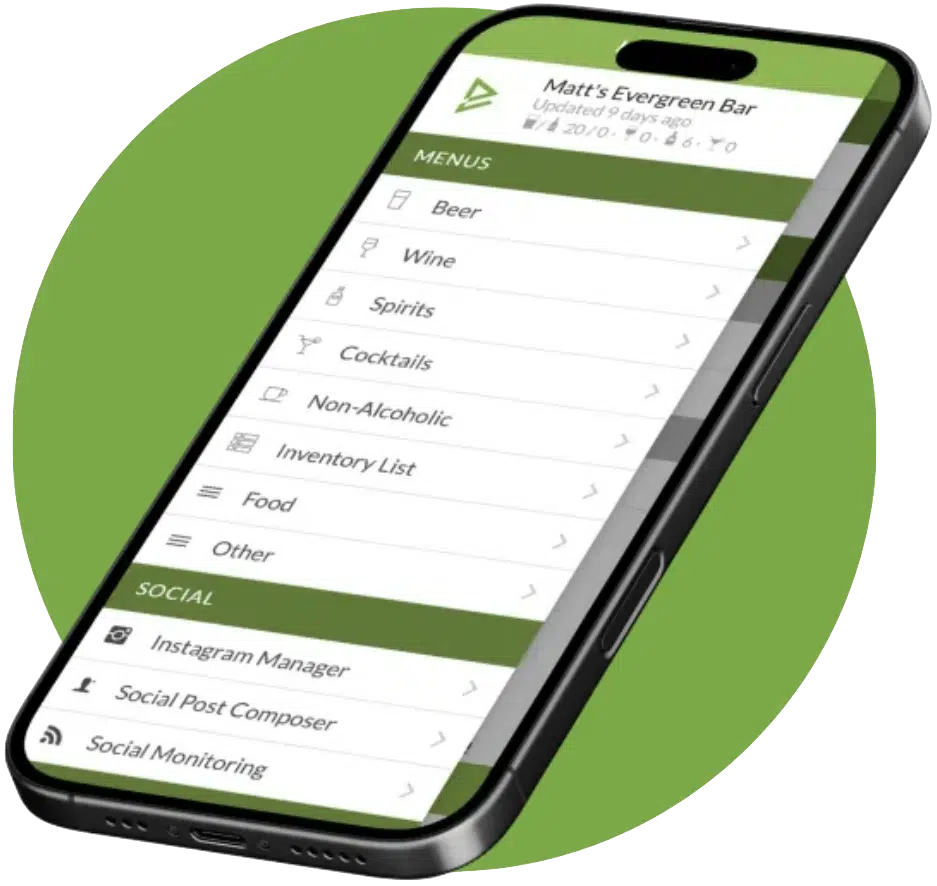
Leveraging platforms such as Evergreen’s digital menu software empowers bar owners to dynamically adjust pricing based on real-time inventory, sales trends, and competitor analysis. This integration of technology reduces manual errors and enhances decision-making, especially when combined with tiered pricing structures and market research. The following sections explore these components in detail, offering insights into how liquor pricing can be both an art and a science.
Trusted by The Griffon, British Beer Co, Whole Foods since 2010
Optimizing Pour Size and Pour Cost
One of the foundational elements influencing liquor pricing is the pour size, which directly affects pour cost — the ratio of the cost to make a drink to its selling price. Industry standards place pour cost between 20-25%, though this can vary based on product type and market positioning. For example:
- Standard pour sizes range from 1 to 1.5 ounces per drink.
- A 1-liter bottle typically yields about 30 drinks at 1.5 ounces per pour.
- Adjusting pour size is a strategic alternative to raising menu prices or altering inventory.
Precise control over pour size helps maintain profitability without alienating customers with sudden price hikes. Using digital tools to monitor pour consistency and cost per drink can significantly reduce waste and increase margins.
Tiered Pricing Models: Aligning Quality with Price
Many establishments adopt a four-tier pricing approach to simplify menu management and align drink prices with perceived quality:
- Well liquors: The most affordable, house-brand spirits used primarily in mixed drinks.
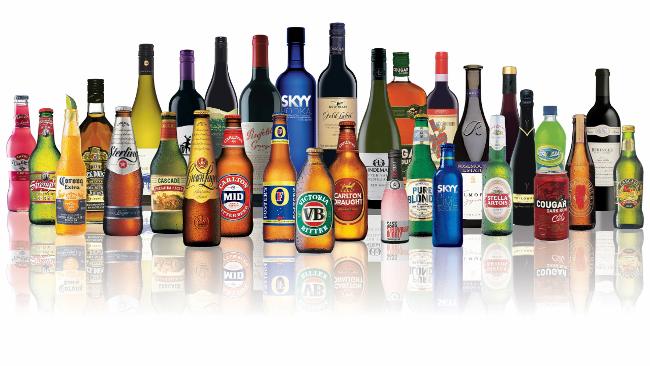
- Call liquors: Recognizable brands customers order by name, such as Bacardi or Smirnoff.
- Premium liquors: Higher-quality brands like Bombay Sapphire or Crown Royal, often favored for cocktails.
- Super-premium liquors: Top-tier, often aged or artisanal spirits, including Grey Goose and single malt Scotch.
While this tiering helps streamline pricing, it’s important to note that categorization depends on brand reputation, customer perception, and cost—not solely bottle price. The traditional manual pricing method involves calculating cost per ounce, intended markup, and rounding to final price points. However, integrating this with inventory management software automates and refines this process.
Bar Owners See Evergreen’s Digital Menu Software in Action
Join 4,500+ restaurants, bars, and breweries using Evergreen to modernize their menus.
Market Positioning and Competitive Pricing
Effective liquor pricing also hinges on understanding market positioning relative to local competitors. Two common strategies include:
- Meeting competitors’ prices by offering similar products at comparable rates.
- Beating competitors’ prices by undercutting prices or providing higher quality at the same price point.
Choosing the right approach depends on clientele expectations, brand identity, and profit goals. Data-driven insights from platforms like Evergreen can analyze competitor menus and sales data to inform pricing adjustments.
Customer Demographics and Pricing Sensitivity
Demographic factors such as age, income level, and occupation influence how customers perceive and respond to liquor prices. For example:
- Affluent customers may tolerate premium pricing for exclusivity and quality.
- Price-sensitive segments may prefer value menus or bundled offers.
Balancing these preferences requires flexible pricing strategies that consider volume versus margin trade-offs. Leveraging data analytics tools helps tailor offerings to specific customer segments, enhancing satisfaction and sales.
Dynamic Pricing During Happy Hours
Happy hour pricing presents unique challenges and opportunities. Because this period often features discounted items to attract traffic, it is critical to:
- Track profit margins on each discounted item meticulously.
- Adjust pour sizes or item selection based on profitability data.
- Utilize software like Evergreen Inventory Tools to monitor sales and cost in real time.
For example, if craft beer yields higher margins during happy hour, it may be advantageous to promote beer specials while moderating cocktail discounts. Data-driven decision-making ensures promotions support overall profitability.
Trusted by The Griffon, British Beer Co, Whole Foods since 2010
Simplifying Pricing with Technology
Manual pricing calculations can be time-consuming and prone to errors. Digital solutions from Evergreen automate complex pricing models by:
- Automatically calculating optimal prices based on package costs, desired markup, and pour sizes.
- Providing pricing suggestions aligned with inventory levels and sales trends.
- Integrating digital menu boards for seamless price updates and improved customer experience.
By adopting such technology, establishments not only save time but also gain agility in responding to market changes and customer preferences.
Frequently Asked Questions (FAQ)
| Question | Answer |
|---|---|
| What factors most affect liquor pricing beyond cost? | Customer demographics, market competition, pour size, promotions like happy hours, and brand positioning all influence pricing decisions. |
| How can technology improve liquor price accuracy? | Digital menu software and inventory tools automate calculations, track real-time data, and recommend optimal prices to maximize margin and sales. |
| Is it better to meet or beat competitor prices? | It depends on your target market and business goals. Meeting prices can maintain parity, while beating prices can attract cost-conscious customers or differentiate your brand. |
| How do happy hour discounts affect profitability? | Happy hour pricing lowers margins but can increase volume. Careful monitoring ensures promotions boost overall profitability rather than eroding it. |
Local Resources for US Bars and Restaurants
| Resource | Description | Link |
|---|---|---|
| National Restaurant Association | National Advocacy Group | National Restaurant Association |
| United States Bartenders’ Guild (USBG) | Advocate for bartenders nationwide | USBG |
| Small Business Association | Key resources for operators including financial assistance | SBA |
Liquor Pricing Strategies Overview
About Casey Marte

Casey Marte is the Senior Technical Content & Product Marketing Strategist, where she turns complex bar and restaurant tech into clear, practical stories operators can actually use. Drawing on years of experience with POS systems, inventory platforms, and front-of-house tools, she specializes in explaining how technology, automation, and AI can simplify daily service and boost profitability.
At EvergreenHQ, Liana partners closely with the product team to shape new features, test tools

About Casey Marte
Senior Technical Content & Product Marketing Strategist
Casey Marte is the Senior Technical Content & Product Marketing Strategist, where she turns bar and restaurant tech into clear, practical stories operators can actually use. Drawing on years of experience with POS systems, inventory platforms, and front-of-house tools, she specializes in explaining how technology and automation can simplify daily service and boost profitability.
At EvergreenHQ, Casey works closely with the product team to shape new features, test tools, and make sure every operator — from a single-location taproom to a multi-unit restaurant group — has the information they need to grow.