The Real Numbers: Bar Profit Margins Explained
Most bars operate on surprisingly thin margins. The average bar’s cost of goods sold (COGS) sits between 28–35%, meaning you keep 65–72% of every drink sale as gross profit. But here’s where most bars leave money on the table: they don’t optimize their menu pricing, upselling, or labor costs. A bar with strong revenue management can push COGS down to 25–28% while improving the customer experience. Understanding how to increase bar revenue starts with knowing your current metrics. Pull last month’s reports and calculate:
-
- Average check size per customer
-
- Drinks sold per hour during peak times
-
- Labor cost as percentage of revenue
-
- Top-selling items and their margins
-
- Customer frequency and repeat rate
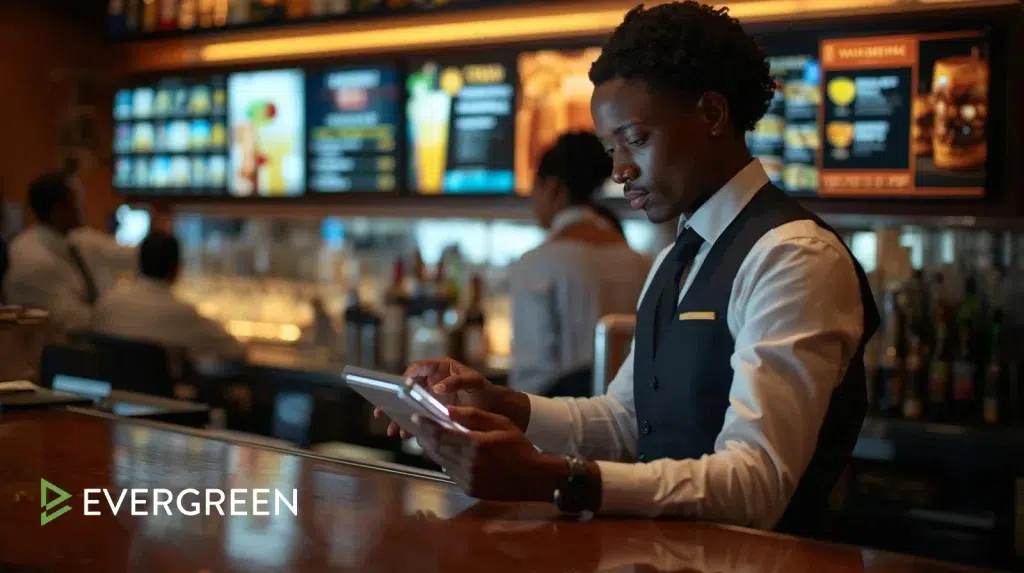
These numbers become your baseline for improvement. When you track these metrics weekly, you create accountability and visibility into what’s actually working. One of the fastest ways to amplify these numbers is through your digital menu boards for bars — surfacing high-margin items visually at the point of decision is one of the most underutilized tools in bar management.
Strategic Menu Pricing for Maximum Bar Revenue
Menu pricing is where how to increase bar revenue becomes actionable. Most bar owners price their drinks based on “what the competitor charges” rather than cost-plus-target-margin math. That’s leaving thousands on the table annually. According to the National Restaurant Association, establishments that use tiered menu pricing consistently report higher gross profit per seat than those using flat-rate pricing.
Start by categorizing your menu into three tiers:
-
- Premium tier (highest margin): Craft cocktails, top-shelf spirits, house wines. These should carry 70–80% margins. A craft cocktail using $3 in ingredients should retail for $12–15.
-
- Core tier (standard margin): Well drinks, domestic beer, rail wines. Target 60–70% margins. A $1.50 beer cost should sell for $5–6.
-
- Value tier (volume driver): Happy hour specials, shots, basic beer. These generate volume and keep customers coming back. Margins can be 40–50%.
Once you’ve priced correctly, commit to no discounting. Bar revenue optimization dies when bartenders give away free rounds or customers camp on half-price appetizers. A study of 200+ bars showed that those with strict pricing policies outperformed discounting bars by 18% in annual revenue growth. If you need to move inventory, bundle it with higher-margin items instead of slashing prices. This strategy also pairs naturally with bar inventory management — knowing what to move, when, is as important as how you price it.
Upselling Techniques That Actually Work
The fastest way to increase bar revenue without new customers is to increase what each customer spends. This is where upselling transforms your economics. A customer who orders beer instead of water, adds a shot to their drink, or upgrades to premium liquor directly impacts your margin.
Train your bartenders on these upselling moves:
-
- The spirit upgrade: “Would you prefer that with top-shelf vodka?” Costs you $0.50 more, sells for $2 more. Pure margin.
-
- The modifier: “Let me make that a double.” Not everyone will accept, but 40% conversion is realistic.
-
- The premium experience: “That cocktail pairs well with our whiskey selection. Want to add a tasting pour?” Creates perceived value.
-
- The order bundling: Food + drink combos lower price resistance and move more inventory per transaction.
-
- The second drink: Offer a second drink at happy hour prices when they order their first.
Bars that track upsell rates discover quickly which bartenders drive revenue per transaction highest. Pay bonuses for upsell performance. A 10% increase in average check size flows directly to your profit. Cornell University’s Center for Hospitality Research has documented how menu design and verbal prompts from staff increase average check sizes by 15–20% when applied consistently.
Food and Beverage Pairing: The Overlooked Revenue Driver
Most bars still treat food as an afterthought. The reality: pairing food with drinks is one of the fastest paths to how to increase bar revenue sustainably. Customers who order food spend 2.5x more per visit on average than customers who drink alone.
You don’t need a full kitchen. Start with:
-
- Charcuterie boards (40% food cost, $18–24 retail)
-
- Wings and fried items (25% cost, $8–12)
-
- Cheese and appetizer plates (30% cost, $12–18)
-
- Sandwich or slider options (35% cost, $9–14)
-
- Desserts and coffee items (20% cost, $5–8)
Train bartenders to recommend food when customers slow their drinking or when they’ve been there an hour. “We just fired up some fresh wings—let me grab you a plate?” This move drives bar revenue growth by extending customer visits and adding a second revenue stream. Pairing this with a well-designed digital menu display for restaurants lets you rotate food specials dynamically and prompt purchases at exactly the right moment.
Happy Hour Strategy: Profit Without Sacrifice
Happy hour doesn’t have to kill your margins. The goal is volume, not deep discounts. Many successful bars use “volume pricing” instead of percentage discounts.
Example: Instead of “$3 off each drink,” offer “Buy 2 get the third at 50% off” or “House cocktail special + free appetizer.” This moves inventory and gets customers in, but doesn’t train your regulars to only come during specials.
How to increase bar revenue during slower hours is about pulling inventory velocity and filling seats, not sacrificing margin entirely. Limit happy hour to 2 hours max. A bar that runs 4-hour happy hours trains its customer base to visit only then. That’s a revenue trap. Pairing your specials with dynamic digital specials boards removes the need to manually update chalkboards every day—your happy hour deals update on a schedule automatically.
Technology and Labor Efficiency
Bar revenue optimization also lives in operational efficiency. Labor is typically 25–35% of bar revenue. Shaving 2–3 points off that ratio flows directly to profit.
-
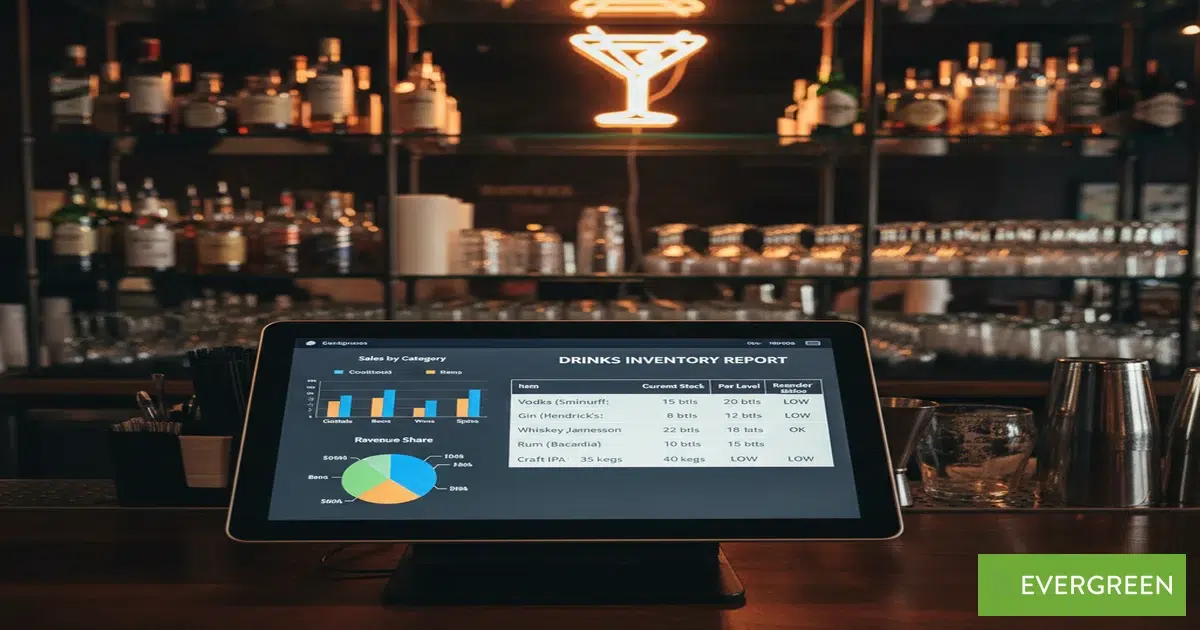
- POS system: Track sales by item, by bartender, by shift. You can’t optimize what you don’t measure.
-
- Inventory management: Waste is invisible margin loss. Real-time inventory tracking prevents over-pouring and spoilage.
-
- Scheduling software: Align staffing to traffic patterns. Too many staff during slow hours kills profit. Smart scheduling picks up 3–5% in margin.
-
- Digital menu boards: Remove the labor cost of hand-written or printed menus. Update prices instantly, highlight daily specials, and push high-margin items without printing costs.
The Toast POS Bar Revenue Report found that bars using integrated POS and digital display systems outperformed non-tech bars by 22% in average annual revenue per location. Technology isn’t a luxury for high-volume bars—it’s a baseline requirement for profitability at any size.
Event Programming and Special Nights
Bars that run themed nights, trivia, live music, or sports watch parties see 25–40% revenue spikes on those days. These events solve two problems at once: they fill slow nights and create stickiness with regular customers.
The cost is minimal—a DJ or trivia host might run $100–200 per night—but the return is substantial. A Tuesday night that normally does $800 can do $1,200+ with programming. That’s a significant annual opportunity if you run 40 events per year. Promoting these events on your digital menu boards drives awareness before guests even reach the bar. Check out how digital menu boards for sports bars are being used to display game schedules and event nights alongside current specials.
Building Customer Loyalty and Repeat Visits
A customer who visits 2x per month is worth roughly 10x a one-time visitor. Loyalty programs drive repeat visits, which is the foundation of stable bar revenue.
-
- Point-based rewards: Every drink = points. 10 drinks = free one. Simple, trackable.
-
- Membership pricing: $20/month membership = $1 off every drink. Members spend more because they want ROI on their membership.
-
- Text/email lists: Send specials to repeat customers. A customer who opts into your list visits 4x more often.
-
- Seasonal promotions: Birthday month discounts, holiday specials, summer drink rotations keep regulars engaged.
The Brewers Association reports that taprooms with structured loyalty programs retain 35% more customers year-over-year than those without. Pair your loyalty strategy with restaurant menu board software that lets you promote specials and loyalty offers automatically without touching a screen every time.
FAQ: How to Increase Bar Revenue
| Question | Answer |
|---|---|
| What’s the fastest way to increase bar revenue? | Increase your average check size through upselling and menu engineering. Adding $1–2 per customer is faster than acquiring new customers. |
| How do I know if my margins are healthy? | Pull your P&L and calculate COGS ÷ Revenue. You want 25–35% COGS. If you’re above 35%, repricing and waste reduction are your priorities. |
| Should I run happy hour? | Yes, but cap it at 2 hours and use volume pricing (buy 2 get 1 half off) instead of flat discounts. This protects margin while building traffic. |
| Does food really impact bar revenue? | Absolutely. Bars with food programs see 40% higher check averages and longer customer visits. Start with appetizers if you don’t have kitchen capacity. |
| How does digital signage help bar revenue? | Digital menu boards reduce labor costs, highlight high-margin specials automatically, and have been shown to increase average check size by 8–12% when strategically designed. |
| What technology should every bar have? | A modern POS system, inventory tracking software, scheduling tools, and digital menu displays are the four core tech investments that pay back fastest. |
Put Your Bar Revenue Strategy Into Action
Every strategy in this guide is only as effective as your execution. Start with tiered menu pricing and systematic upselling training. Add one tech tool—and measure results over 60 days. Evergreen helps bars increase bar revenue through smart digital menu displays that highlight your highest-margin items at every customer touchpoint.

About Casey Marte
Senior Technical Content & Product Marketing Strategist
Casey Marte is a Senior SEO & Digital Marketing Strategist at EvergreenHQ. With over 14 years of experience across content strategy, search optimization, and now AI-driven marketing, she specializes in making complex digital concepts practical for the operators who need them most.
At EvergreenHQ, Casey brings a data-first mindset to everything from how your business ranks in search to how your brand shows up across platforms. Whether you’re running a single taproom or a growing multi-unit restaurant group, she’s focused on making sure your digital presence works as hard as your team does.