How to increase restaurant profit margins with menu engineering is the strategic process of redesigning your menu to maximize profitability and customer satisfaction. By analyzing which dishes are most profitable and popular, restaurant owners can adjust pricing, positioning, and portions to drive more revenue from every customer visit.
Menu engineering isn’t just about changing prices—it’s about understanding the psychology of your customers and the economics of your kitchen. When done right, it can increase profit margins by 5-15% without losing customers or quality.
In this guide, we’ll show you exactly how to apply menu engineering techniques to your restaurant, from data analysis to design implementation. Whether you run a quick-service restaurant, casual dining, or fine dining, these strategies work across all restaurant types.
What Is Menu Engineering?
Menu engineering is a data-driven approach to menu design that combines profitability analysis with customer psychology. The method was pioneered by restaurant consultants and has become standard practice in high-performance restaurants.
The core idea is simple: not all menu items are created equal. Some items are highly profitable but rarely ordered. Others are popular but unprofitable. Menu engineering helps you identify these items and optimize your menu layout, pricing, and descriptions to boost sales of your highest-margin dishes.
The best part? Your customers don’t feel manipulated. When you apply menu engineering correctly, they’re happier with their choices, and you’re happier with your profit margins.
Step 1: Calculate the Food Cost of Every Menu Item
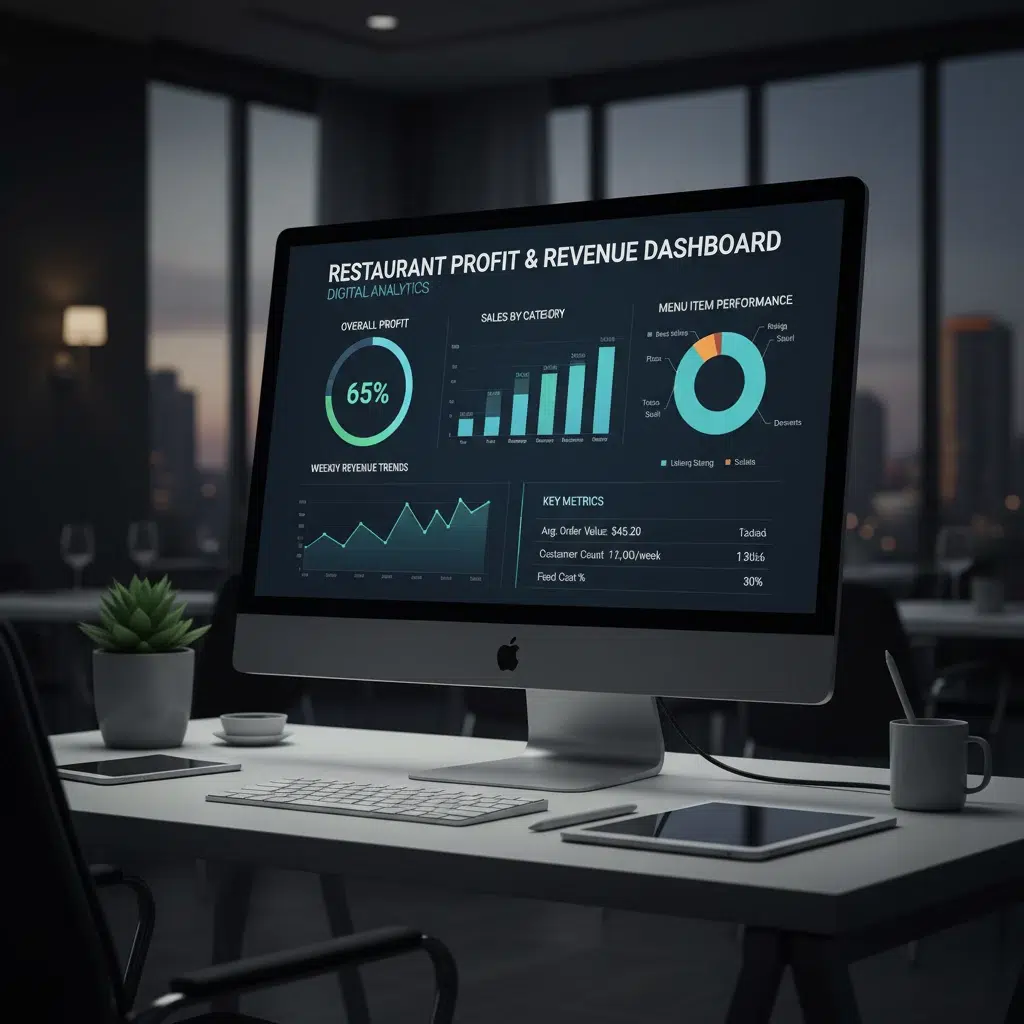
Before you can optimize anything, you need baseline data. Start by calculating the exact food cost for every single menu item you serve.
This includes:
- Raw ingredient costs (adjusted for waste and trimming)
- Protein, vegetables, grains, sauces, and garnishes
- Condiments, butter, oil, and cooking loss
- Portion size variations across staff
Once you have food costs, calculate your ideal food cost percentage. For most restaurants, target 28-35% food cost. That means a $10 entree should cost you $3-3.50 in ingredients.
Menu engineering starts with accurate food cost data. If your numbers aren’t right, your optimization won’t work. Some restaurants use inventory management software to track this automatically. Others use spreadsheets. Either way, accuracy is essential.
Step 2: Track Sales Data and Popularity
You need to know which items are actually selling. Use your POS (point-of-sale) system to pull data on item popularity over the last 3-6 months.
Look for:
- Number of items sold per menu category
- Total revenue generated per item
- Percentage of customers ordering each item
- Average price point per category
This data tells you what your customers want. Menu engineering respects this preference while guiding customers toward higher-margin options through positioning, description, and pricing.
Step 3: Classify Menu Items Into Four Categories
Now comes the core of menu engineering. Plot each item on a 2×2 matrix based on popularity and profitability:
Stars (Popular + High Profit): These are your champions. Keep them prominent, feature them in your descriptions, price them confidently. These items sell themselves.
Plow-horses (Popular + Low Profit): Customers love these but you make little money. Either raise the price slightly, reduce portion size, or swap in lower-cost ingredients. Sometimes these items attract customers who then buy higher-margin items—in that case, keep them at a loss leader price.
Puzzles (Unpopular + High Profit): These are money-makers that customers overlook. Reposition them on the menu, rewrite descriptions to emphasize appeal, or bundle them with popular items. If repositioning doesn’t work in 2-3 months, consider removing them.
Dogs (Unpopular + Low Profit): Remove these from your menu. They waste kitchen resources, slow down service, and don’t generate revenue. The only exception is if they’re required for legal reasons (like a vegetarian option) or essential for customer experience.
How Menu Positioning Drives Sales
Menu engineering uses psychological positioning to guide customer choices. Research shows that menu placement dramatically affects what people order—sometimes by 20% or more.
Golden Triangle: On a typical menu, the eyes focus on three areas: top right, center, and top left. Place your highest-profit items in these zones with bold description and pricing.
Describe Star Items Compellingly: Instead of “Grilled Chicken Breast,” write “Herb-Brined Grilled Chicken with Pan Sauce, Seasonal Vegetables, and House-Made Polenta.” The extra detail makes customers more confident in their choice and justifies higher pricing.
Use Strategic Pricing: A price ending in .95 feels cheaper than .99. A price of $18.95 feels significantly cheaper than $19.95, even though the difference is just 5 cents. This is called the left-digit effect.
Remove Dollar Signs: If you use dollar signs on your menu, remove them from item pricing (but not category headers). Research shows menus without dollar signs lead to higher spending.
Menu Engineering Techniques to Boost Profit Margins
Price Increases on Plow-horses
Since these items are popular, customers don’t count them as carefully. A 5-10% price increase usually goes unnoticed, especially if you add one premium ingredient or improve plating.
Menu engineering for plow-horses means: raise prices, then reinvest in quality to justify the increase. Your customers stay happy, your margins improve.
Portion Size Optimization
Many restaurants over-portion to seem generous. In reality, customers don’t notice a 10-15% reduction in portion size, especially if plating improves.
Example: If you serve 10 oz of protein and customers actually want 8.5 oz, you save money on ingredient cost while satisfying customers better with improved presentation.
Bundle High-Margin Items
Create combo plates that pair a plow-horse with a higher-margin item. “Pasta & Grilled Vegetable Plate” sells better than “Pasta” plus “Grilled Vegetables” ordered separately.
Bundles also simplify ordering and kitchen operations, which reduces labor cost.
Ingredient Swaps
You don’t need to reduce quality to lower ingredient cost. Swap expensive ingredients for equally delicious alternatives:
- Premium olive oil → Quality but more affordable brand (customers rarely taste the difference)
- Expensive fish → Equally delicious seasonal fish that’s in season (costs less, tastes fresh)
- Imported butter → High-quality domestic butter (minimal taste difference, lower cost)
Menu engineering is about smart cost reduction, not corners-cutting that hurts quality.
Upsell Through Description
Describe add-ons and sides in a way that makes customers want to order them. Instead of “Side of Sauce: $2,” write “Upgrade to our Truffle Aioli: $3.”
The premium ingredient name and lower price increase make the upsell more appealing.
Menu Design Changes That Drive Revenue
How your menu looks affects how much customers spend. Menu engineering principles apply to visual design:
- Box High-Profit Items: Use visual boxes, borders, or shading to draw attention to your star dishes.
- Use High-Quality Photos: Customers order items they can visualize. Food photography increases average check size by 10-20%.
- Group Items by Cuisine Type, Not Price: Organizing by cuisine encourages exploration. Organizing by price encourages budget-consciousness.
- Limit Menu Size: More items confuse customers and strain kitchen capacity. A focused menu of 8-12 items per category is optimal.
- Use Professional Design: A menu that looks sloppy or dated signals lower quality and justifies lower prices in customers’ minds.
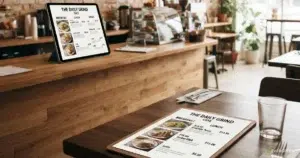
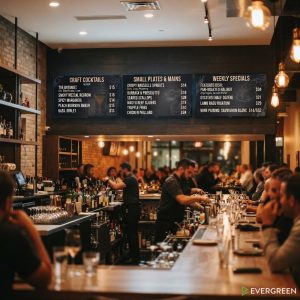
Digital Menus and Menu Engineering on Display Boards
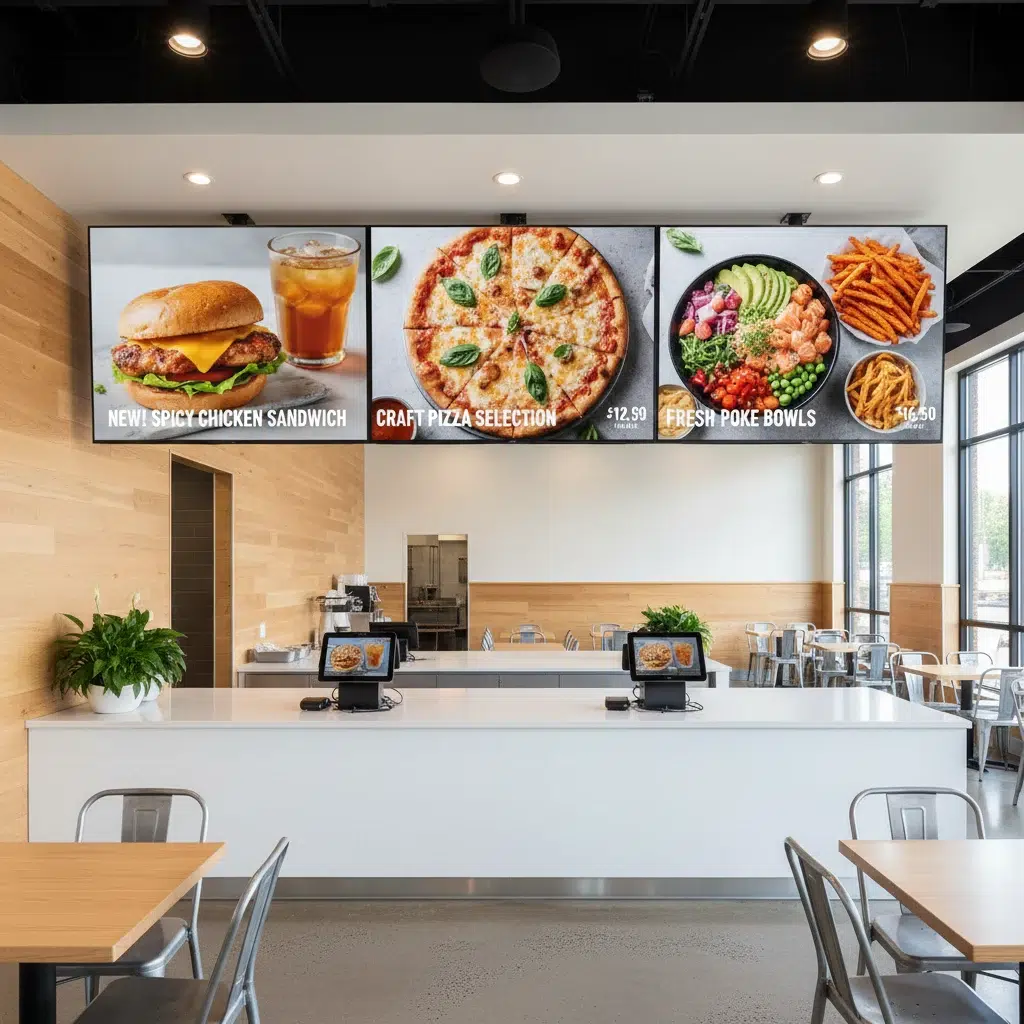
If you use digital menu boards or tablets, menu engineering becomes even more powerful. You can:
- Update pricing and offerings in real-time based on inventory
- Rotate featured items to test customer response
- Display high-margin items more prominently during peak hours
- Use animations and high-quality photography to drive sales of star items
- Track which items customers view but don’t order (and why)
Digital menu boards give you data and flexibility that printed menus never could. By combining digital displays with menu engineering principles, you can optimize profit margins continuously.
FAQ: Common Menu Engineering Questions
| Question | Answer |
| Will customers notice if I reduce portions? | Not if you improve plating and presentation. A well-plated 8 oz portion looks more generous than a pile of 10 oz on an undersized plate. |
| How often should I update my menu? | Quarterly is ideal. Review sales data every 3 months and adjust pricing, portions, and descriptions based on performance. Major menu rewrites can happen annually. |
| Should I remove my most popular item if it’s not profitable? | Not necessarily. Some items are loss-leaders that attract customers who then buy higher-margin items. Track the full customer journey before deciding. |
| Can menu engineering work for fast-casual or QSR? | Absolutely. Fast-casual and QSR operations benefit even more from menu engineering because portion optimization and high-margin add-ons directly impact profitability. |
| How much revenue can menu engineering actually add? | Typical results: 3-7% revenue increase, 5-15% profit margin increase. This comes from better pricing, reduced waste, and higher-margin item sales. |
Real-World Example: Pasta Restaurant
Let’s say a pasta restaurant has:
- Spaghetti Marinara: Popular (25% of pasta orders), low profit ($2 margin per order)
- Wild Mushroom Ravioli: Less popular (8% of orders), high profit ($6 margin)
Using menu engineering, the restaurant could:
1. Raise spaghetti price by $2 (customers still order it; few notice the small increase)
2. Reduce portion size slightly and improve plating
3. Reposition wild mushroom ravioli to prime menu real estate
4. Add a compelling description: “House-Made Wild Mushroom Ravioli with Truffle Cream Sauce”
5. Create a promotion: “Try our Chef’s Favorite Ravioli—customers who order it rate it 4.8/5 stars”
Result: Spaghetti margin improves $2/order. Ravioli orders increase 20-30%. Overall pasta profitability jumps 8-12%.
Implementing Menu Engineering: Your Action Plan
Week 1: Pull POS data for the last 6 months. Calculate food costs for every menu item. Create a spreadsheet.
Week 2: Classify items into the 4 categories (Stars, Plow-horses, Puzzles, Dogs). Identify which items to optimize first.
Week 3: Rewrite descriptions for star items. Plan portion size adjustments. Design new menu layout.
Week 4: Implement changes. Increase staff awareness of high-profit items. Brief servers on upsell opportunities.
Month 2-3: Monitor sales data. Track which changes worked. Refine pricing and descriptions based on results.
Quarter 2: Review full quarter’s data. Plan next round of optimization.
Tools to Help with Menu Engineering
You don’t need expensive software to do menu engineering. A spreadsheet works fine. But these tools can automate parts of the process:
- Toast: POS system with built-in profitability analytics
- MarginEdge: Food cost tracking and menu analysis
- MenuTiger: Menu design and cost tracking
- TouchBistro: iPad POS with menu engineering reports
Even with basic tools, you can apply menu engineering principles immediately.
How Evergreen HQ Helps with Menu Optimization
If you use digital menu boards to display your menu, you’re already ahead. Digital displays let you implement menu engineering strategies that paper menus can’t match: real-time pricing adjustments, dynamic featured items, A/B testing of descriptions, and instant inventory updates.
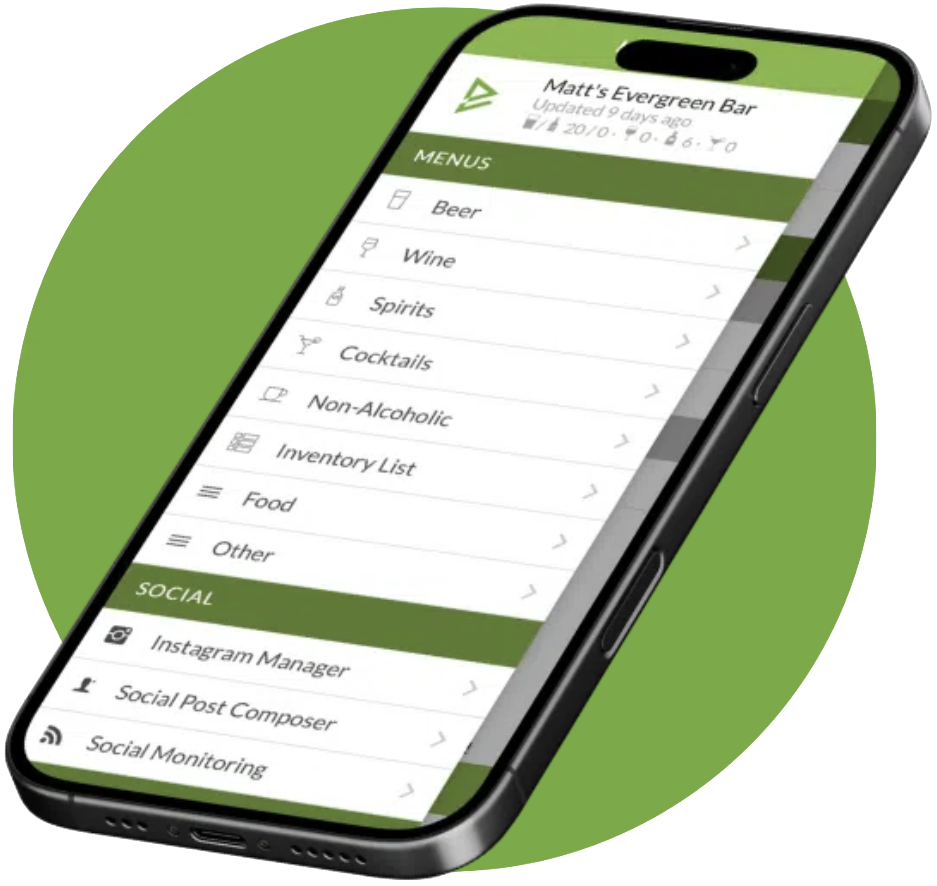
Evergreen’s digital menu board software makes it easy to design, update, and optimize your menu for maximum profitability. You can test new descriptions, highlight high-margin items, and track which offerings drive the most revenue—all from a single dashboard.
Digital menu boards paired with menu engineering principles create a powerful system for restaurant profitability. Your menu becomes a sales tool, not just a list of dishes.
About Evergreen HQ
Evergreen HQ is a cloud-based digital menu board platform designed for restaurants, cafes, breweries, and food service operations. With Evergreen’s easy-to-use software, restaurants can update menus in real-time, manage multiple locations, and optimize their offerings for profitability. Based in San Diego, California, Evergreen HQ serves hundreds of food service businesses across North America. Learn more at https://evergreenhq.com.
Restaurant Owners: See Evergreen’s Digital Menu Software in Action
Join 4,500+ restaurants, bars, and breweries using Evergreen to modernize their menus.
About Casey Marte
Senior Technical Content & Product Marketing Manager, EvergreenHQ
Casey Marte is the Senior Technical Content & Product Marketing Manager at EvergreenHQ, where she turns complex bar and restaurant tech into clear, practical stories operators can actually use. Drawing on years of experience with POS systems, inventory platforms, and front-of-house tools, she specializes in explaining how technology, automation, and AI can simplify daily service and boost profitability.
At EvergreenHQ, Casey partners closely with the product team to shape new features, test tools, and make sure every operator — from a single-location taproom to a multi-unit restaurant group — has the information they need to grow.