Digital menu allergen compliance became a legal requirement for large restaurant chains in California this week. Under SB-68, chains with 20 or more US locations must now disclose the nine major allergens for every menu item. This must be in writing, at the point of ordering. The law took effect July 1, 2026, and it builds on federal allergen definitions that have existed since 2004. For operators still updating printed inserts by hand, this is the moment to rethink how menu changes actually get made. Digital menu allergen compliance is easiest for the restaurants that can already update a screen in minutes.
What SB-68 Actually Requires for Digital Menu Allergen Compliance
California’s ADDE Act, known as SB-68, is the clearest test case yet for digital menu allergen compliance nationwide. It requires written, item-level allergen disclosure on menus. This applies to restaurant chains with 20 or more US locations. The disclosure must be specific to each dish. A blanket statement like “our kitchen uses allergens” does not meet the standard. Digital menu allergen compliance means every item needs its own accurate allergen tags, visible before ordering.

Restaurant Owners See Evergreen’s Digital Menu Software in Action
Join 4,500+ restaurants, bars, and breweries using Evergreen to modernize their menus.
The Top 9 Allergens for Digital Menu Allergen Compliance
Federal law, through the FALCPA and FASTER Act, defines the nine major allergens. Both packaged food and restaurant disclosure rules build on this same list. Restaurant allergen labeling under SB-68 covers exactly these nine.
| Allergen | Common Hidden Sources |
|---|---|
| Milk | Casein, butter, cream sauces |
| Eggs | Mayonnaise, batters, some pastas |
| Fish | Worcestershire sauce, stock bases |
| Crustacean shellfish | Bisques, some Asian sauces |
| Tree nuts | Pesto, baked goods, oils |
| Peanuts | Sauces, dressings, fried oil |
| Wheat | Roux, breading, soy sauce |
| Soy | Soy sauce, edamame, tofu-based dishes |
| Sesame | Tahini, some spice blends, buns |
Written Disclosure Rules in 80-100 Words
SB-68 allows digital formats like QR codes, but a written alternative must always be available. Digital menu allergen compliance cannot rely on a screen alone if a guest cannot access it. The safest approach pairs a digital menu board with a printed backup, both showing identical, current information. Verbal reassurance from staff supports the process but does not satisfy the legal requirement on its own. Consistency matters most. The same allergen data must appear in-store, on your website, and on delivery platforms — or the disclosure is incomplete.
Why Independent Restaurants Should Pay Attention Too
SB-68 technically applies to chains with 20 or more locations. But digital menu allergen compliance as a practice is bigger than one law. Michigan has introduced similar rules, and more states are expected to follow. Independent bars and restaurants that get ahead of allergen disclosure requirements now avoid a scramble later. Digital menu allergen compliance also protects guests directly. A missed allergen isn’t just a fine risk — it’s a real safety issue for someone at your table.
Here’s what makes staying compliant manageable instead of overwhelming:
- Real-time updates — change one item’s allergen tags across every screen instantly
- Supplier change alerts — catch reformulated ingredients before they reach a guest
- Consistent data — the same allergen info on your board, website, and delivery apps
- Audit trail — a record of when allergen data was last reviewed and by whom
- Faster corrections — no reprinting inserts every time a recipe shifts
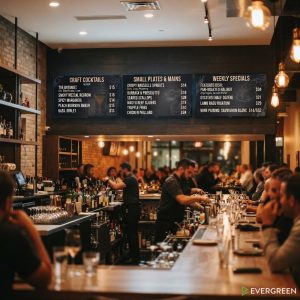
For one taproom operator switching off static boards, the appeal came down to a simple frustration: any small menu change meant redesigning printed inserts by hand and waiting on a reprint. Once the board went digital, staff could update items themselves within minutes, without touching a design file or a print shop. That same speed is exactly what digital menu allergen compliance depends on when a recipe or supplier changes overnight.
Here’s a local news breakdown of what SB-68 requires and who it affects:
What “Reasonably Should Know” Means for Your Menu
Regulators don’t only look at what you’ve confirmed. Restaurant allergen labeling law also covers what you could have identified through normal due diligence. If a supplier spec sheet was available and nobody checked it, that gap becomes the operator’s responsibility. The official compliance guidance puts this responsibility squarely on the operator. This is where inventory management and menu data need to talk to each other. A menu engineering platform that connects recipes to live board content closes that gap automatically.

Digital vs. Print for Digital Menu Allergen Compliance
| Factor | Printed Menus | Digital Menu Boards |
|---|---|---|
| Update speed | Days, requires reprinting | Seconds, applies instantly |
| Cross-channel consistency | Manual, error-prone | Centralized, one data source |
| Cost per change | Reprint fees add up | No added cost per update |
| Audit trail | Hard to track | Change history logged automatically |
| SB-68 written requirement | Satisfies on its own | Needs a written backup available |
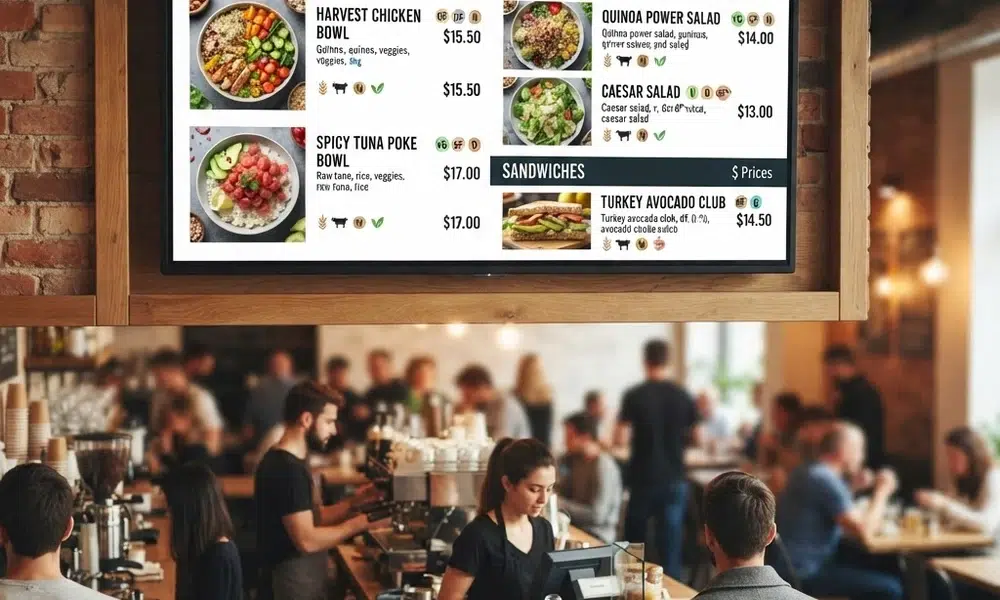
Restaurants relying only on printed menus for allergen labeling face a real cost problem. Every ingredient change means a reprint, and reprints take time regulators won’t wait for. Digital signage software built for restaurants turns that multi-day process into a same-shift fix. That speed matters most when a supplier substitution happens without warning.
Bar Owners See Evergreen’s Digital Menu Software in Action
Join 4,500+ restaurants, bars, and breweries using Evergreen to modernize their menus.
Frequently Asked Questions
| Question | Answer |
|---|---|
| Does SB-68 apply to my independent restaurant? | Only chains with 20+ US locations are covered today, but similar rules are expanding to other states. |
| Can I use only a QR code for allergen disclosure? | No. A written alternative must always be available alongside any digital format. |
| What counts as a major allergen under SB-68? | Milk, eggs, fish, shellfish, tree nuts, peanuts, wheat, soy, and sesame — the federally recognized nine. |
| How often should allergen data be reviewed? | Any time a recipe, supplier, or ingredient changes — it’s an ongoing obligation, not a one-time setup. |
| Does a digital menu board fully satisfy the law? | It helps significantly with digital menu allergen compliance, but a written backup option must still be available to guests. |

Staying Ahead of Allergen Disclosure Rules
SB-68 is the strictest test of digital menu allergen compliance restaurants have seen. It likely won’t be the last, per recent local news coverage of the rollout. Digital menu allergen compliance gives operators a faster way to stay accurate as recipes, suppliers, and regulations keep shifting. Evergreen helps bars and restaurants update menu content the moment something changes, instead of waiting on a reprint. Visit the free trial page to see how digital menu allergen compliance can fit into your daily operations.

About Casey Marte
Senior SEO & Digital Marketing Strategist, EvergreenHQ
Casey Marte is a Senior SEO & Digital Marketing Strategist at EvergreenHQ, with over 14 years of experience across content strategy, search optimization, and AI-driven marketing. She specializes in making complex digital concepts practical for the operators who need them most.
At EvergreenHQ, Casey brings a data-first mindset to everything from how your business ranks in search to how your brand shows up across platforms. Whether you are running a single taproom or a growing multi-unit restaurant group, she is focused on making sure your digital presence works as hard as your team does.