AI digital menu boards are changing how restaurants price, display, and sell items in real time. Taco Bell’s already testing screens that shift layout and item order by time of day and location. McDonald’s is piloting something similar at a handful of drive-thru locations. For independent restaurants and bars, this same category of tech is now available without needing an enterprise-level budget. Let’s get into what AI digital menu boards actually do.
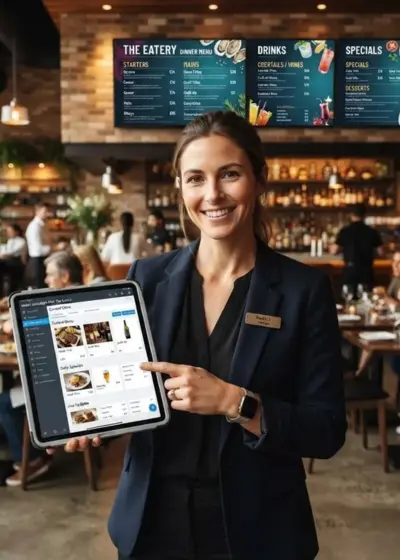
Restaurant Owners See Evergreen’s Digital Menu Software in Action
Join 4,500+ restaurants, bars, and breweries using Evergreen to modernize their menus.
What Are AI Digital Menu Boards?
Digital menu boards are screens that adjust their own content based on real-time data. They don’t run a fixed layout all day. The board can reorder items, highlight specials, or react to inventory, time of day, even the weather. Traditional digital signage just shows a static menu and calls it done. AI digital menu boards go a step further, reacting to conditions as they actually happen. Think a brewery pushing IPAs to the top during happy hour. Or a QSR spotlighting breakfast only until 10:30am before it swaps over on its own.
Why Taco Bell and McDonald’s Are Betting on This
Yum Brands confirmed it tested AI-arranged digital menu boards at Taco Bell locations. The system adjusted layout and visuals without touching the pricing structure itself. The goal, per the company, was better menu insight on a car-by-car basis at the drive-thru. McDonald’s is running its own pilot too, a Google-powered system called ArchIQ, at five US locations. It’s built to streamline order-taking and recognize repeat customers. Neither company is treating this as a gimmick. Both are calling it a core part of their growth strategy. That says a lot about where the restaurant industry is actually heading.
What This Means for Independent Restaurants and Bars
You don’t need Yum Brands’ budget to get something out of AI-powered menu boards. The underlying idea, showing the right item at the right price at the right moment, scales down just fine. A digital signage software platform built for independent operators can run the same logic at a fraction of the cost. It can surface high-margin drinks during a slow Tuesday afternoon. Or it can adjust a board the second a keg blows, with zero design work involved.
Smart Pricing in 80-100 Words
Smart pricing lets AI digital menu boards respond to what’s actually happening. It’s not the same static price list running from open to close. A bar can bump visibility on a slow-moving cocktail during a lull. Or spotlight a dish nearing its use-by date before it goes to waste. This isn’t the aggressive surge pricing some diners worry about, either. Most restaurant setups lean on presentation and emphasis rather than raw price swings. The end result feels less like a sign bolted to a wall. It’s more like a sharp employee who’s actually reading the room.
Restaurants adopting dynamic menu boards are seeing this play out in a few consistent ways:
- Higher average ticket size: upsells and add-ons surface right when they matter
- Reduced waste: items nearing their use-by date get pushed before they’re tossed
- Faster updates: no need to reformat an entire board over one item change
- Better labor efficiency: less staff time spent managing signage by hand
- Data visibility: real numbers on what’s selling, broken down hour by hour
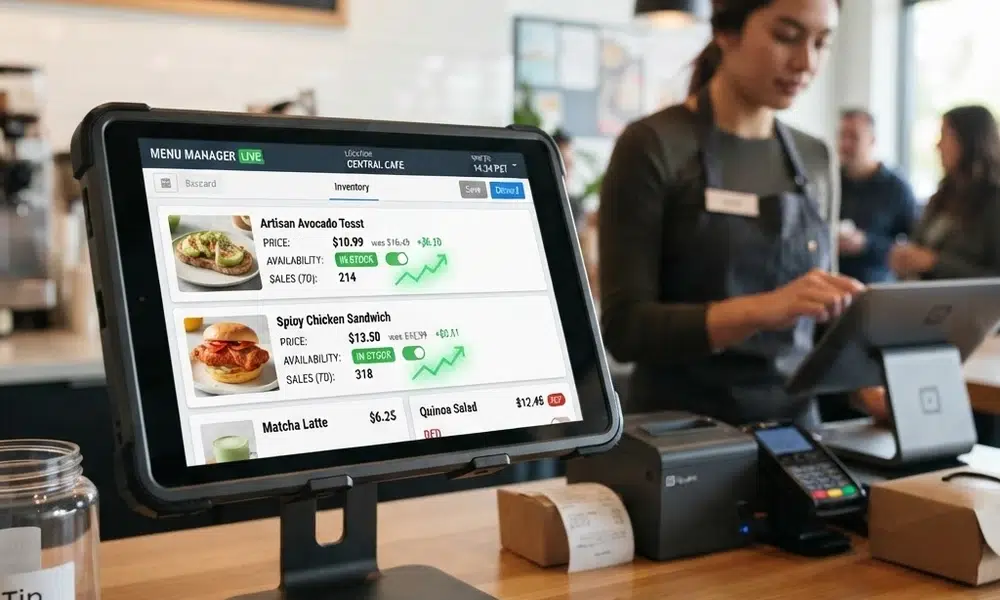
One operator using Evergreen’s platform described the moment a keg blew mid-shift on a Friday night. Instead of scrambling to redesign a board by hand, the menu updated in seconds. The item just disappeared from the display on its own. That’s the kind of real-time correction AI digital menu boards are actually built to handle. Nothing flashy about it. It just means fewer fires to put out during a packed shift.
Here’s a closer look at how this is already playing out at the drive-thru, straight from a national news segment:
Restaurant Revenue Management Gets Easier With Real Data
Every AI digital menu board platform generates something that’s often more valuable than the automation itself, and that’s data. Operators no longer have to guess which items sell best at 2pm versus 8pm. They get a real-time read on menu engineering performance instead. That data feeds straight into decisions about restaurant profit margins and staffing. The National Restaurant Association’s own tech and innovation resources point to the same shift happening industry-wide. Gut instinct is slowly losing ground to real-time numbers.
AI Digital Menu Boards vs. Traditional Digital Signage
| Feature | Traditional Digital Signage | AI Digital Menu Boards |
|---|---|---|
| Content updates | Manual, one item at a time | Automatic, based on real-time conditions |
| Pricing display | Fixed all day | Adjusts by time, demand, or inventory |
| Data insight | None | Real-time sales and item performance data |
| Staff time required | Higher (manual design changes) | Lower (updates apply instantly) |
| Best for | Simple, rarely-changing menus | Bars, QSRs, and multi-daypart menus |
Getting Started Without an Enterprise IT Team
Adopting AI-powered digital menu boards doesn’t take the kind of infrastructure Yum Brands or McDonald’s have in-house. Most independent operators start with a digital menu board platform already built for bars and restaurants. From there, they layer in automation rules as they go: happy hour pushes, low-stock alerts, or daypart swaps. Reports from Business Insider and ABC News both point to the same pattern playing out. This technology is scaling down from flagship pilots into standard restaurant tech in months, not years.
Frequently Asked Questions
| Question | Answer |
|---|---|
| Do AI digital menu boards raise prices automatically? | Most restaurant implementations focus on layout and item emphasis rather than aggressive price changes. Pricing rules are typically set by the operator, not the AI. |
| Is this technology only for large chains? | No. Independent restaurants and bars can use scaled-down versions through platforms built specifically for smaller operators. |
| How fast can a menu update? | Changes typically apply in seconds, compared to manual redesigns that can take much longer. |
| Does this replace a POS system? | No, it works alongside a POS system, often pulling inventory and sales data from it. |
| What’s the biggest benefit for a small bar? | Faster updates during a busy shift and better visibility into which drinks actually sell. |
The Bottom Line on AI Digital Menu Boards
Chains like Taco Bell and McDonald’s are proving AI digital menu boards aren’t just a passing trend. They’re becoming a standard part of how restaurants run, period. Independent operators don’t need anywhere near that tech budget to get the same core benefits. Faster updates, smarter pricing, and real sales data are well within reach. Evergreen gives bars and restaurants an accessible way to bring this into daily operations. Visit the free trial page to see how AI digital menu boards can work for your location.

About Casey Marte
Senior SEO & Digital Marketing Strategist, EvergreenHQ
Casey Marte is a Senior SEO & Digital Marketing Strategist at EvergreenHQ, with over 14 years of experience across content strategy, search optimization, and AI-driven marketing. She specializes in making complex digital concepts practical for the operators who need them most.
At EvergreenHQ, Casey brings a data-first mindset to everything from how your business ranks in search to how your brand shows up across platforms. Whether you are running a single taproom or a growing multi-unit restaurant group, she is focused on making sure your digital presence works as hard as your team does.