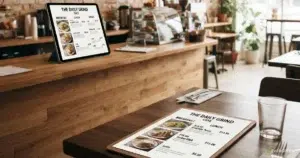
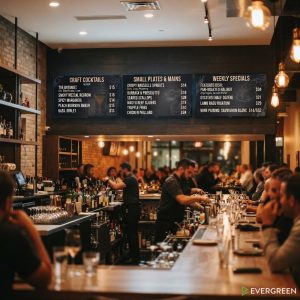
Electronic menu boards have become essential tools for restaurants, bars, and quick-service establishments looking to streamline operations and improve customer engagement. Unlike traditional printed menus, electronic menu boards allow businesses to update offerings, pricing, and promotions instantly without reprinting costs. This flexibility is particularly valuable for seasonal items, happy hour specials, and inventory management.
An electronic menu board displays food and beverage items on high-definition screens visible from anywhere in your establishment. Whether mounted above counters in QSRs, positioned at table sides in fine dining, or displayed throughout a food court, these boards create professional, modern impressions while giving you complete control over your menu’s appearance and messaging.
Implementing an electronic menu board isn’t just about aesthetics—it’s a strategic business decision. Studies show that digital displays increase perceived value, reduce ordering confusion, and encourage upselling. Staff can push featured items more effectively when they’re visually prominent, and customers make faster decisions when menus are clear and well-organized.
Key Benefits of Electronic Menu Boards
Electronic menu boards offer transformative advantages over static alternatives. Real-time updates mean your board always reflects actual inventory, preventing staff from selling unavailable items. This reduces customer disappointment and improves operational efficiency.
Dynamic pricing is another major benefit. During peak hours, you can highlight premium items. During slow periods, promote deals on slower-moving products. Temperature-based promotions work too—display hot beverages in winter, cold drinks in summer. These micro-adjustments drive revenue without complex workflows.
Integration with your POS system creates a seamless ecosystem. When inventory drops, your board updates automatically. When a dish sells out, it disappears from the display immediately. This synchronization prevents the frustration of customers ordering unavailable items and frees staff from manual updates.
Energy efficiency matters as well. Modern electronic menu boards use LED technology consuming far less power than legacy systems. Many models include scheduled on/off times, allowing you to power down during closed hours and reduce utility bills.
Electronic Menu Boards for Different Venues
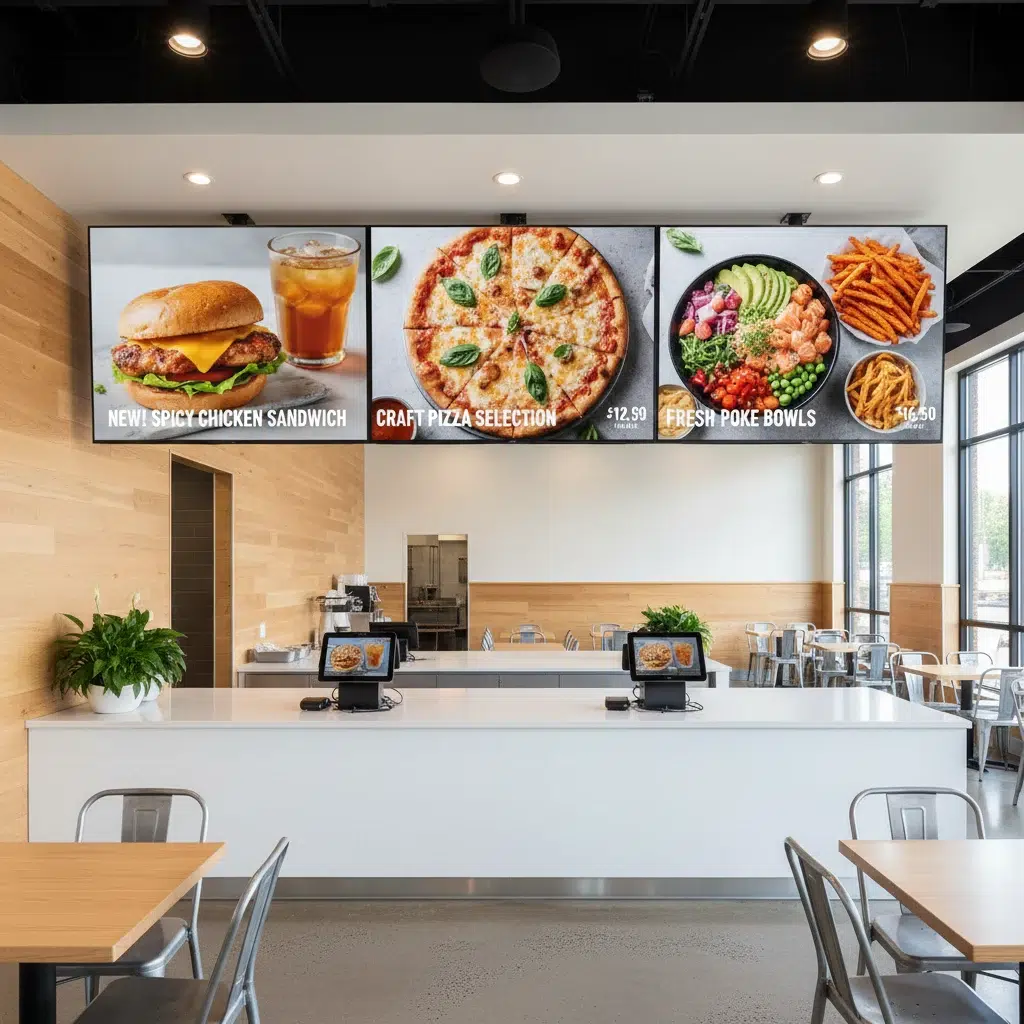
Restaurant electronic menu boards vary by venue type. Quick-service restaurants benefit from large, eye-catching displays above order counters showing meal combos and upsell items. Fine dining establishments use smaller, tastefully designed screens at tables to enhance the dining experience.
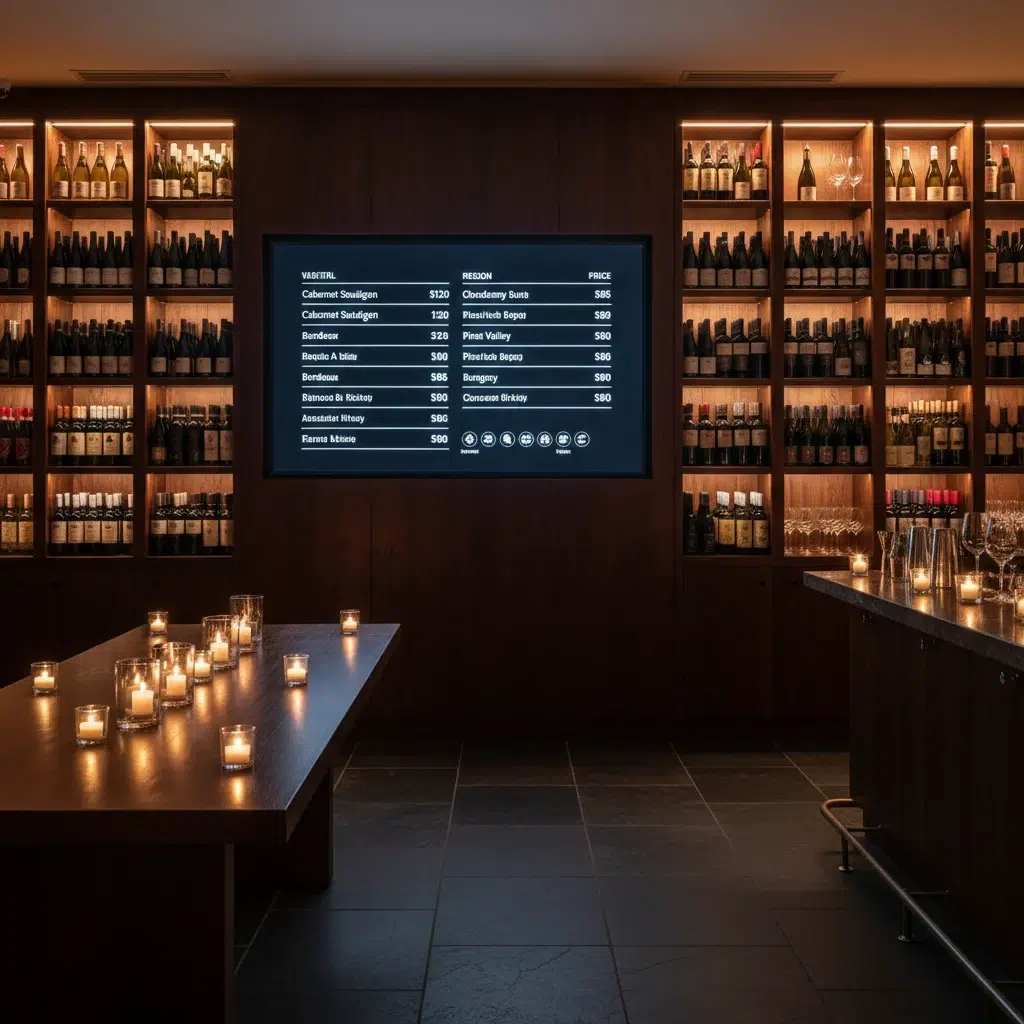
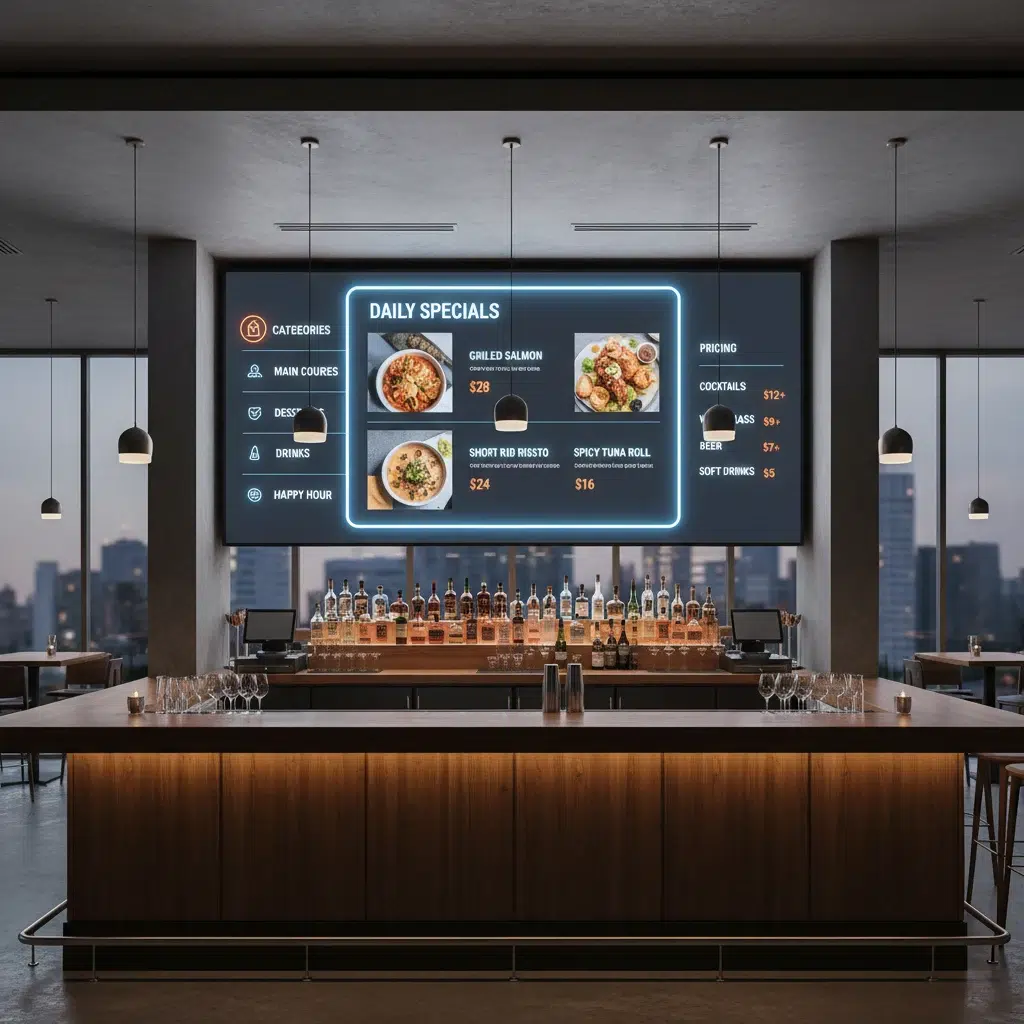
Bars and breweries use electronic menu boards to showcase rotating draft selections, happy hour specials, and craft beer pairings. Food trucks need compact, durable solutions resistant to weather and vibration. Food courts require coordinated displays across multiple vendor stations, each operator controlling their own menu section.
Hotels integrate electronic menu boards in restaurants, room service ordering, and event spaces. Gas stations and convenience stores display promotional items and time-sensitive offers. Event venues use these boards for catering menus and venue information. Each application demands specific features and mounting solutions.
How Electronic Menu Board Software Works
The software behind electronic menu boards is designed for ease of use, even for non-technical staff. Most platforms offer drag-and-drop interfaces where you simply upload images, enter descriptions, and set prices. Changes publish instantly to all connected displays.
Remote management is standard. Update menus from your office, home, or another location using your phone or computer. Scheduling features let you set time-based changes—breakfast menus transition to lunch automatically, weekend specials appear only when relevant, and promotional pricing applies to specific date ranges.
Analytics provide insights into customer behavior. Track which menu items receive the most views, how long customers spend studying specific sections, and how display changes impact sales. This data guides menu optimization and inventory decisions.
Multi-location management simplifies operations for chains. Update one menu and push it to all locations simultaneously, or customize menus for individual restaurants. Centralized control saves time and ensures brand consistency.
Reducing Food Waste With Electronic Menu Boards
Food waste is a significant cost factor in hospitality. Electronic menu boards help control it by accurately reflecting current inventory. If you’re running low on perishable items, prominently feature them to increase sales before spoilage.
Seasonal menus are built into the software, letting you plan inventory cycles around menu changes. End-of-week specials clear remaining stock automatically. Predictive analytics suggest menu adjustments based on purchasing patterns, helping you order optimal quantities.
Staff accountability improves when items must be removed from the digital menu before customers can order them. This eliminates accidental overselling and the waste that results from unfulfilled orders.
Implementation and Setup
Setting up electronic menu boards starts with assessing your space and display needs. Do you need one large board above your counter, or multiple displays throughout the venue? High-resolution is critical for readability at distance—4K or 1080p minimum, depending on viewing distance.
Choose between LED displays for brightness and outdoor use, LCD/QLED for better color accuracy, or projection systems for large spaces. Consider mounting options—wall-mounted, ceiling-hung, or on movable stands. Future-proof your investment by selecting systems compatible with modern software platforms.
Connectivity matters. Most systems require reliable internet for central management. WiFi or wired connections both work; choose based on your infrastructure. Backup power supplies ensure your boards stay functional during outages.
Staff training is essential. Even user-friendly software requires someone to manage updates, troubleshoot issues, and optimize displays. Most providers offer onboarding support to get your team comfortable quickly.
Cost Considerations for Electronic Menu Boards
Pricing for electronic menu boards ranges from affordable entry-level solutions to premium enterprise systems. Small displays start around $1,000-$3,000, while larger installations can reach $10,000+. Software subscriptions typically run $50-$500 monthly depending on features and the number of displays.
ROI typically appears within 12-24 months through increased upselling, reduced labor costs, and decreased waste. Many restaurants report 15-20% improvements in check average simply from better menu visibility and presentation.
Financing options are available—many vendors offer lease-to-own programs making entry costs manageable. Bundle deals combining hardware and software provide better value than purchasing separately.
Maintenance and Support
Modern electronic menu boards require minimal maintenance. Regular cleaning keeps displays sharp and professional. Software providers handle technical updates automatically. Most equipment includes 3-year warranties covering manufacturing defects.
Choose vendors offering responsive customer support. Technical issues shouldn’t take hours to resolve—your board directly impacts customer experience and revenue. 24/7 support or rapid response times are worth the investment.
FAQ: Electronic Menu Boards
| Question | Answer |
|---|---|
| Can I use electronic menu boards if my internet goes down? | Yes. Most systems cache content locally, displaying the last uploaded menu if connectivity is lost. Some hardware supports offline mode for critical periods. |
| How long do electronic menu boards last? | Quality displays typically last 50,000-100,000 hours (5-10 years of regular use). LED technology is more durable than older LCD options. |
| Can I display videos or animations on electronic menu boards? | Yes. Modern software supports video content, animated transitions, and dynamic graphics. Food videos and item animations increase engagement and perceived value. |
| Are electronic menu boards difficult to install? | Most installations take 2-4 hours for a single display, including mounting and network setup. Complex multi-display installations require professional help but are still straightforward. |
| Can multiple staff members update the menu simultaneously? | Yes. Cloud-based platforms allow multiple users with different permission levels. Managers approve changes before they publish for safety. |
| What happens if a display malfunctions? | Most vendors provide rapid replacement units while failed hardware goes to repair. Service-level agreements guarantee uptime with financial compensation for outages. |
Choosing the Right Electronic Menu Board Solution
Electronic menu boards aren’t all created equal. Evaluate platforms on ease of use, feature depth, customer support, and long-term costs. Trial periods let you test systems with real-world data before committing.
Consider integration with your existing POS, loyalty programs, and third-party services. Scalability matters—if you’re growing, ensure the system can expand with you. Cloud-based platforms typically offer better scalability than on-premise solutions.
Look for vendors with strong track records in your industry. A solution perfect for QSR might lack features fine-dining establishments need. Industry-specific templates save setup time and ensure best practices from day one.
The Future of Digital Menu Technology
Emerging technologies are expanding electronic menu board capabilities. AI-powered recommendations suggest items based on time of day, weather, and customer preferences. Facial recognition demographics can customize menus by audience. Voice ordering integration works seamlessly with digital displays.
Sustainability features appeal to environmentally conscious customers. Some platforms highlight plant-based options, carbon footprint data, or local sourcing. These details influence purchase decisions and build brand loyalty among values-driven customers.
Mobile integration creates unified experiences. Customers view menus on their phones before ordering, saving time during rushes. Digital menu boards sync with mobile apps, enabling seamless pre-ordering and loyalty rewards.
Transform Your Menu
Electronic menu boards transform how restaurants, bars, and hospitality venues operate. From real-time menu updates to dynamic pricing and analytics, these systems drive efficiency, reduce costs, and enhance customer experience. The investment pays dividends through increased upselling, reduced waste, and improved operational control.
Ready to upgrade your menu? Start your free trial with Evergreen to see how digital menu boards can transform your business. Book a demo with our team to discuss your specific needs and venue type.
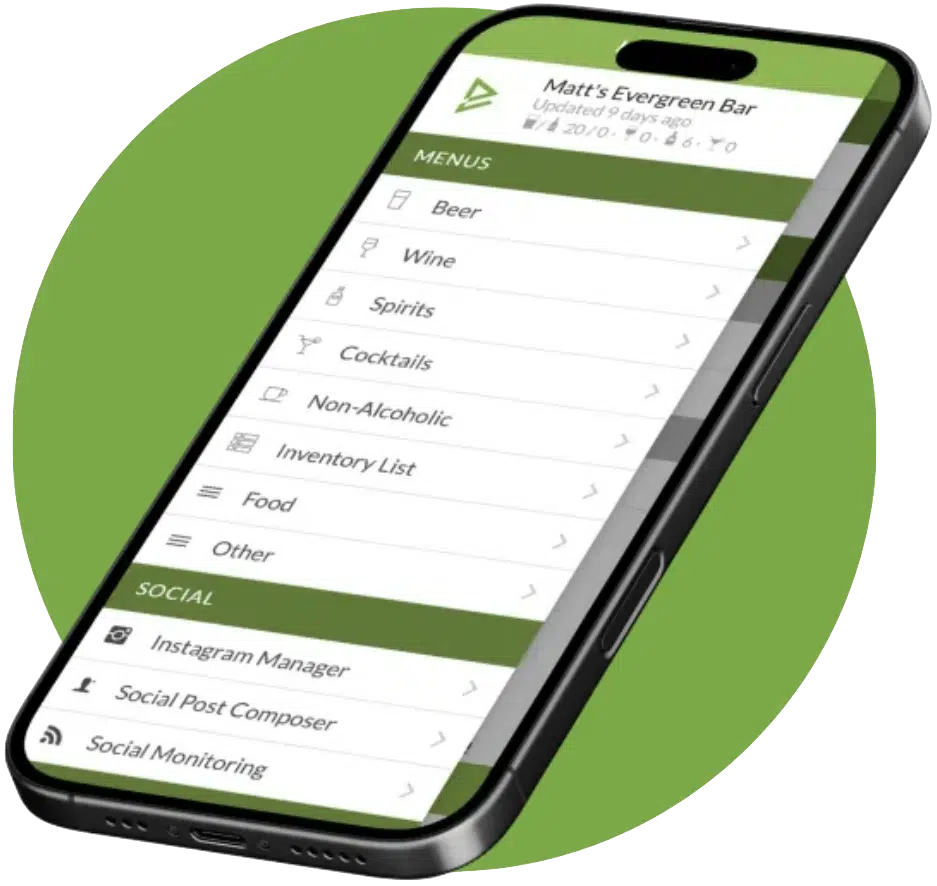
See Evergreen’s Digital Menu Software in Action
Join 4,500+ restaurants, bars, and breweries already using Evergreen to update menus in seconds.

About Casey Marte
Senior Technical Content & Product Marketing Strategist
Casey Marte is a Senior SEO & Digital Marketing Strategist at EvergreenHQ. With over 14 years of experience across content strategy, search optimization, and now AI-driven marketing, she specializes in making complex digital concepts practical for the operators who need them most.
At EvergreenHQ, Casey brings a data-first mindset to everything from how your business ranks in search to how your brand shows up across platforms. Whether you’re running a single taproom or a growing multi-unit restaurant group, she’s focused on making sure your digital presence works as hard as your team does.