Digital menu boards are not just an aesthetic upgrade. Operators who switch from printed menus to digital displays consistently report measurable improvements in average check size, upsell conversion, and operational efficiency. The data behind these outcomes is strong enough that major quick-service chains — McDonald’s, Burger King, Panera — have invested billions in digital menu rollouts across their entire networks. What the big chains proved at scale, independent and multi-unit operators are now proving at their own locations. Here is what the numbers actually show.
Average Check Size Increases
The most consistent finding across digital menu board research is an increase in average check size after implementation. McDonald’s reported that digital menu boards increased average ticket values by 3 to 5 percent across their U.S. locations. For a location doing $2 million in annual revenue, that is $60,000 to $100,000 in additional sales — from menu boards alone.
The mechanism behind this increase is well understood. Digital menu boards allow operators to feature high-margin items with larger images and more prominent placement. Upsell prompts (add a drink, add a side, try this combo) can be built into the display and rotated based on time of day. Specials and limited-time offers get visual prominence that a static printed board cannot match.
| Metric | Average Impact After Digital Menu Board Implementation |
|---|---|
| Average check size | 3 to 8% increase |
| Upsell conversion rate | Up to 15% improvement |
| Perceived wait time | Reduced by up to 35% |
| Menu update time | From hours to seconds |
| Printing cost savings | $2,000 to $10,000+ per year depending on location count |
Upsell Performance and Item Placement

Where an item sits on a digital menu board directly affects how often it sells. Menu engineering research consistently shows that the top-left and center positions get the most visual attention. On a dynamic digital display, you control exactly what goes in those positions — and you can change it based on the time of day, the day of the week, or what you are trying to move.
A sports bar pushing premium cocktails during happy hour puts those cocktails front and center at 4:00 PM. A breakfast counter highlights its highest-margin combo meal during the morning rush. A food truck featuring a daily special gives it the top position that day and removes it the moment it sells out. None of this is possible with a static printed board — and all of it directly affects revenue.
QSR Magazine’s analysis of digital menu board deployments found that operators who actively managed item placement and featured high-margin items saw upsell rates improve by 10 to 15 percent within the first 90 days.
Perceived Wait Time and Guest Satisfaction
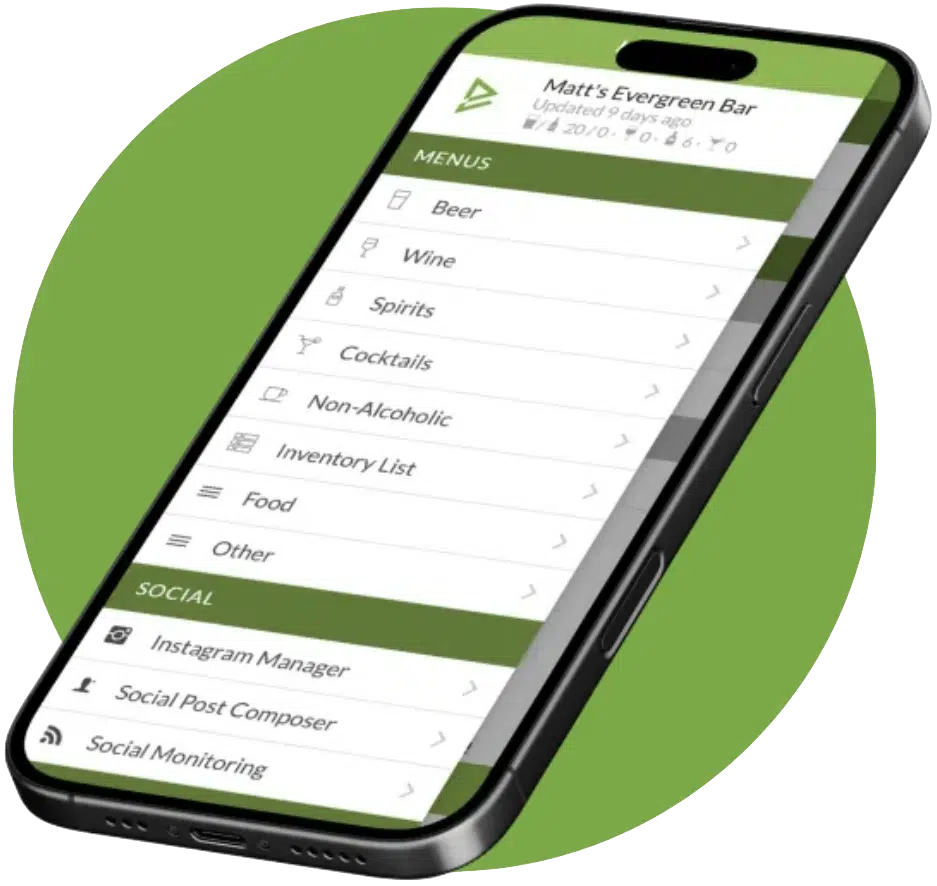
See Evergreen’s Digital Menu Software in Action
Join 4,500+ restaurants, bars, and breweries already using Evergreen to update menus in seconds.

About Casey Marte
Senior Technical Content & Product Marketing Manager, EvergreenHQ
Casey Marte is the Senior Technical Content & Product Marketing Manager at EvergreenHQ, where she turns bar and restaurant tech into clear, practical stories operators can actually use. Drawing on years of experience with POS systems, inventory platforms, and front-of-house tools, she specializes in explaining how technology and automation can simplify daily service and boost profitability.
At EvergreenHQ, Casey works closely with the product team to shape new features, test tools, and make sure every operator — from a single-location taproom to a multi-unit restaurant group — has the information they need to grow.