The benefits of loyalty cards for restaurants and bars go well beyond giving customers a free drink every tenth visit. A well-designed loyalty program increases visit frequency, lifts average spend per visit, and builds the kind of relationship with your guests that makes them choose you over competitors — every single time. This guide breaks down the real difference between loyalty cards and rewards cards, which approach works best for hospitality businesses, and how combining a smart loyalty strategy with digital menu software creates a complete guest experience that keeps customers coming back.
Table of Contents
Loyalty Cards vs. Rewards Cards: What’s the Difference?
The terms are often used interchangeably — but they describe different structures with meaningfully different outcomes for your business.
| Feature | Loyalty Card | Rewards Card |
|---|---|---|
| Primary mechanic | Visit-based (stamp per visit) | Spend-based (points per dollar) |
| Customer behavior driven | Frequency of visits | Spend per visit |
| Benefit redemption | Fixed reward (e.g., free item) | Flexible (points = dollars) |
| Data collection | Low (paper) or high (digital) | High |
| Setup cost | Low | Medium–High |
| Best for | Bars, cafes, casual dining | Higher-volume, data-driven operators |
For most independent restaurants and bars, a loyalty card program — especially a digital one — is the right starting point. The simplicity makes it easy for customers to participate and easy for staff to execute without additional training.
Ready to lock in your Evergeen menu profits?
Use Evergreen to update pricing, items, and promos across all your digital menus in minutes instead of hours.
7 Proven Benefits of Loyalty Cards for Restaurants and Bars
1. Increased Visit Frequency
The most well-documented benefit of loyalty cards is simply that they make customers come back more often. Harvard Business Review research shows that even a 5% increase in customer retention produces a 25–95% increase in profits. A customer who visited 8 times last year visiting 10 times this year — on the same menu — is pure margin growth.
2. Higher Average Check Size
Loyalty members consistently spend more per visit than non-members. When a customer knows they’re working toward a reward, they’re more likely to add a dessert, order a second drink, or upgrade their entrée. This “completion motivation” is well-documented in behavioral economics and directly benefits your restaurant’s profit margin.
3. Valuable Customer Data
Digital loyalty programs collect data that transforms how you market and operate. You learn what your regulars order, when they visit, and what promotions drive their behavior. That data makes every marketing campaign more targeted and every menu decision more informed. Building loyalty in the digital age means using that data actively — not just collecting it.
4. Reduced Marketing Cost Per Visit
Acquiring a new customer costs 5–7x more than retaining an existing one. Your loyalty card program is essentially a low-cost customer retention machine. A well-timed push notification or email to loyalty members — “Your free drink is waiting — come see us this week!” — costs almost nothing and drives real traffic. That’s the kind of marketing ROI most paid advertising can’t touch.
5. Competitive Differentiation
In a market with multiple bars or restaurants competing for the same customer, a strong loyalty program is a tangible reason to choose you. If your competitor across the street offers nothing and you offer a free drink after five visits, the decision for a regular becomes easy. Loyalty creates switching costs — not through inconvenience, but through genuine value.
6. Word-of-Mouth and Referrals
Loyal customers are your most effective marketers. A guest who feels recognized and rewarded tells their friends. Referral programs built into your loyalty card structure — “Refer a friend, earn double points” — turn your best customers into an active acquisition channel. This is how independent restaurants and bars compete with chains that have massive marketing budgets.
7. Feedback and Menu Insights
Loyalty members are your most engaged customers. They’re the most willing to fill out a post-visit survey, respond to a text, or tell you what’s working on your menu. That feedback loop helps you make better menu decisions — which items to keep, which to cut, and what your regulars actually want to see on your digital menu boards.
How Digital Menus Complement Your Loyalty Program
Your loyalty card program and your digital menu system work together in ways most operators overlook:
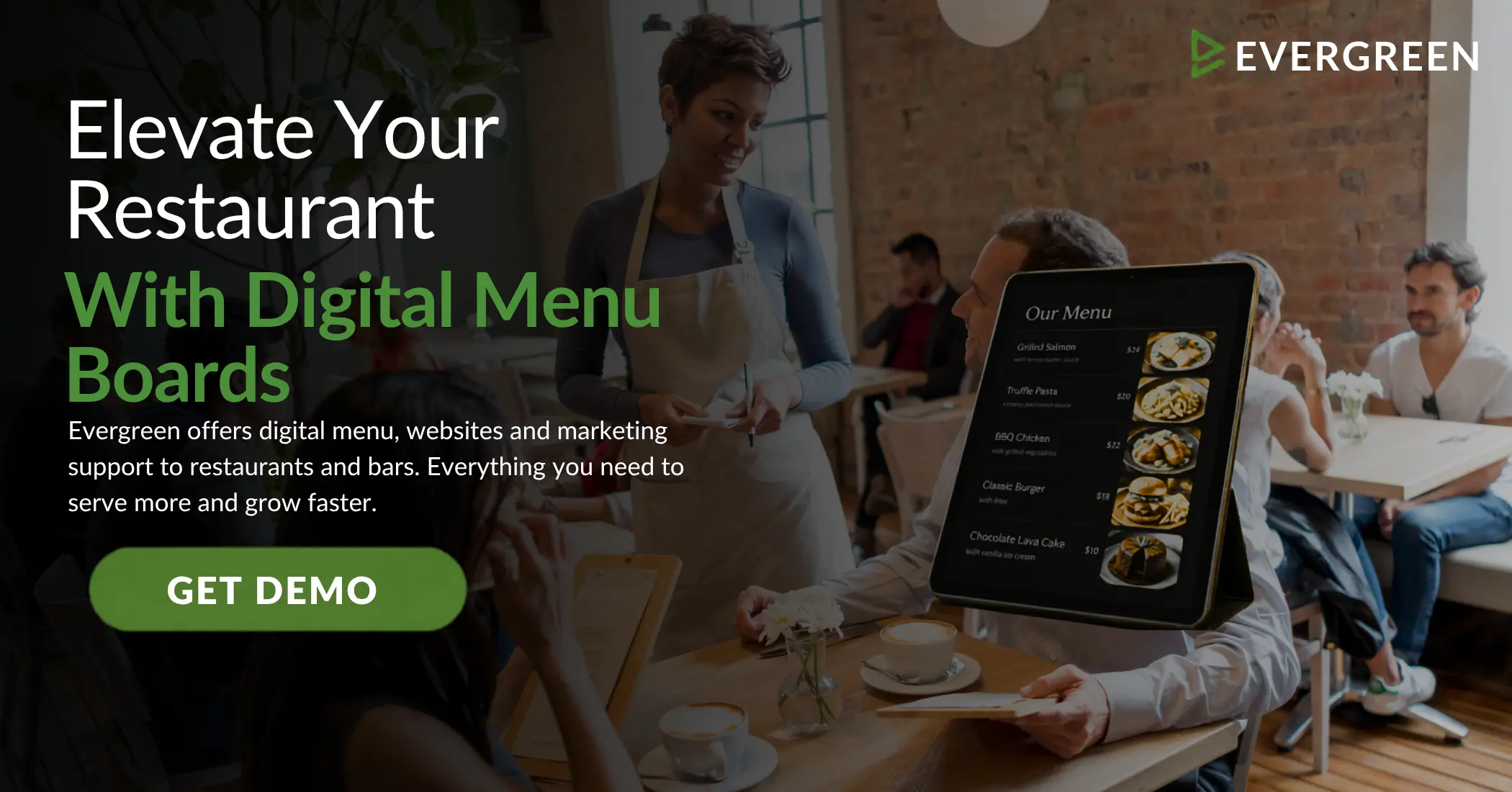
- Feature loyalty member exclusives on-screen — Display “Members Only” pricing or specials on your digital menu boards to reinforce the value of joining.
- Promote loyalty sign-ups at the point of decision — A well-placed QR code on your digital menu or table display drives in-moment sign-ups when customers are already engaged.
- Highlight loyalty-eligible items — If your rewards are tied to specific purchases (e.g., double points on craft cocktails), feature those items prominently on your menu boards to drive toward your highest-margin offerings.
- Update seasonal rewards instantly — When you run a limited-time loyalty promotion, update every menu board and your website menu simultaneously through Evergreen — no reprinting, no lag.
According to NCR’s Restaurant Loyalty Research, restaurants that actively promote their loyalty program at the point of sale see 30–40% higher enrollment rates than those who rely solely on external marketing.
4,500+ Restaurants and Bars Trust Evergreen
Join 4,500+ restaurants, bars, and breweries using Evergreen to modernize their menus.
Frequently Asked Questions About Loyalty Cards and Rewards Cards
| Question | Answer |
|---|---|
| What are the main benefits of loyalty cards for restaurants? | Increased visit frequency, higher average check, customer data, lower marketing costs, and competitive differentiation. |
| Are loyalty cards or rewards cards better for bars? | Loyalty cards (visit-based) are simpler and work well for most bars. Rewards cards (spend-based) suit higher-volume or data-driven operators. |
| Do loyalty programs actually increase restaurant revenue? | Yes — Harvard Business Review research shows a 5% increase in retention can lift profits 25–95%. Loyalty members also spend more per visit. |
| How much does a restaurant loyalty program cost? | Digital loyalty programs typically run $50–$200/month. Paper card programs cost almost nothing to start. |
| How can I promote my loyalty program in-store? | Display it on digital menu boards, table cards, and receipts. QR code sign-ups on your digital menu drive in-moment enrollment. |
| What loyalty platforms work best for restaurants? | Toast Loyalty, Square Loyalty, Paytronix, and Thanx are all strong options for independent restaurants and bars. |
Build Guest Loyalty That Drives Real Revenue Growth
The benefits of loyalty cards for restaurants and bars are clear: more visits, higher spend, better data, and customers who choose you over everyone else. Pair your loyalty strategy with Evergreen’s digital menu software to promote member exclusives on every board, drive in-moment sign-ups, and keep your entire menu current across every touchpoint. Start your free trial today and see what a smarter menu and a stronger loyalty program can do together.
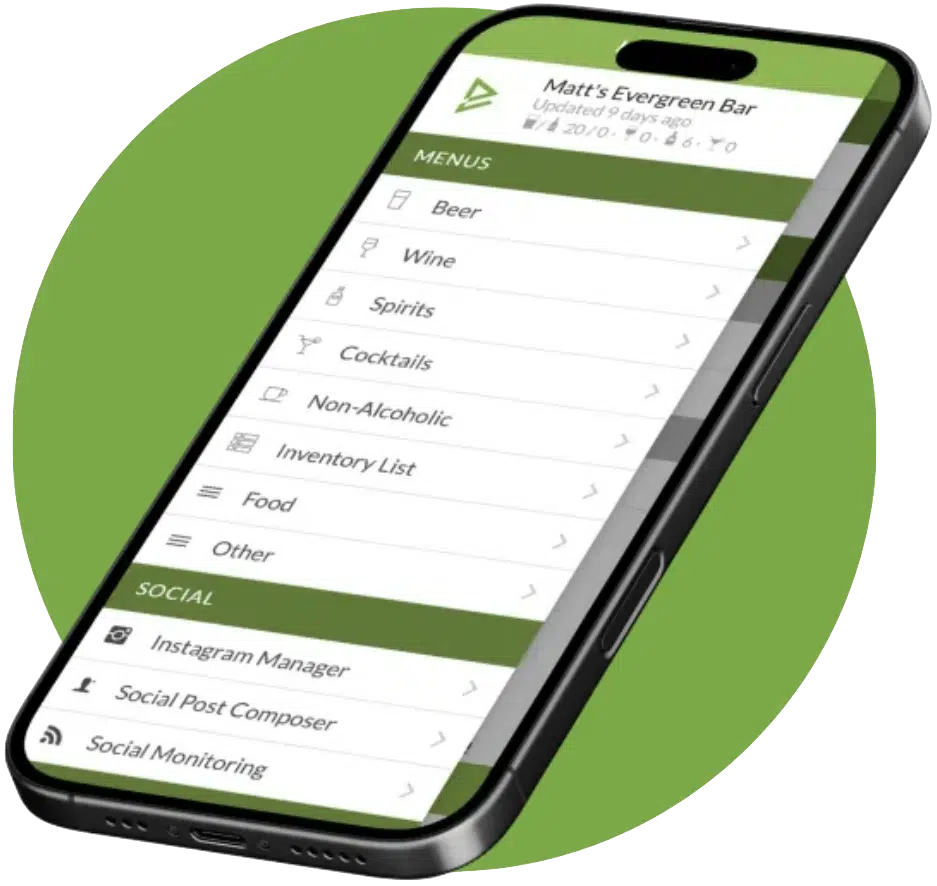
See Evergreen’s Digital Menu Software in Action
Join 4,500+ restaurants, bars, and breweries already using Evergreen to update menus in seconds.

About Casey Marte
Senior Technical Content & Product Marketing Strategist
Casey Marte is the Senior Technical Content & Product Marketing Strategist, where she turns bar and restaurant tech into clear, practical stories operators can actually use. Drawing on years of experience with POS systems, inventory platforms, and front-of-house tools, she specializes in explaining how technology and automation can simplify daily service and boost profitability.
At EvergreenHQ, Casey works closely with the product team to shape new features, test tools, and make sure every operator — from a single-location taproom to a multi-unit restaurant group — has the information they need to grow.