Knowing how to increase bar revenue is the difference between a bar that survives the slow season and one that builds real momentum year-round. Most bar owners focus on cutting costs when margins get tight — but the bigger opportunity is almost always on the revenue side. From smarter menu design to technology that sells for you between conversations, the strategies that work aren’t complicated. They require consistency. This guide breaks down the most effective tactics operators are using right now to grow revenue without adding staff or expanding square footage.
Start With What’s Already Working
Before adding anything new, look at what your current top sellers actually are. Most bars are sitting on two or three items that drive a disproportionate share of revenue — and they’re not promoting them nearly enough. Pull your POS data and identify your highest-margin, fastest-moving drinks. Those are the ones your staff should be recommending first and your menu should be showcasing prominently.
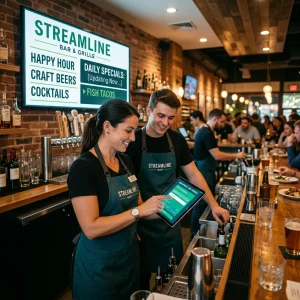
A digital menu board makes this easy. Instead of a static chalkboard that takes an hour to update, you can highlight your top performers in real time — rotating specials, featured cocktails, and limited-time offerings that create urgency without any extra effort from your bartenders. Bar revenue strategies that leverage your existing assets tend to have the fastest payback.
Menu Engineering: The Layout Is the Strategy
Where you place items on your menu matters more than most operators realize. Menu engineering applies the same principles restaurants have used for decades — anchoring high-margin items, using visual hierarchy to draw the eye, and removing decision fatigue by trimming options that don’t convert.
On a digital menu board, you have a tool traditional menus can’t match: the ability to change placement, sizing, and emphasis without reprinting anything. Move a slow-moving cocktail to a featured position, add a photo, run it as a happy hour special — and measure the result in real time. That kind of flexibility is how bars go from guessing to actually knowing what drives bar sales.
- Feature high-margin items in the top-right position — the natural eye anchor
- Use photos strategically — only for items you want to sell more of
- Group items to encourage add-ons (beer + shot, cocktail + appetizer)
- Remove items that confuse or slow down ordering
Upselling Without the Awkward Ask
Training staff to upsell is valuable — but it’s inconsistent. Some bartenders are great at it, others forget during a rush. The menu itself should do a portion of that work automatically. When your bar menu is designed to suggest premium options, add-ons, and pairings visually, the upsell happens before the customer even opens their mouth.
A taproom in Denver saw this play out after switching to a digital display system. The guests who had already agreed on their first round were surprised by how fast the next round landed — not because service was faster, but because they’d already made up their minds reading the menu while they waited. That kind of passive selling is built into how to increase bar revenue without adding labor.
Specific upsell prompts that work well on digital menus:
- “Upgrade to a premium pour for $2 more”
- “Add a flight for $6” — displayed next to single beer listings
- “Happy hour ends at 6 PM” — creates urgency without staff reminders
Happy Hours That Actually Drive Volume
Happy hour is one of the most powerful tools in bar revenue growth, but most operators run it the same way they’ve always run it — same hours, same discounts, same result. The operators gaining ground right now are using happy hour more strategically.
Consider running tiered happy hours that reward loyalty — first-timers get a standard discount, regulars get something better. Or flip the script entirely: instead of discounting alcohol, offer a free appetizer with the purchase of two drinks at full price. The check average stays higher, and the food order extends the visit.
Use your bar marketing tools to promote these specials digitally — updated in real time on your menu boards so customers see the deal the moment they walk in, not after they’ve already ordered.
Events: Turning Slow Nights Into Revenue Engines
Events are one of the clearest paths to increasing bar revenue on nights that would otherwise be quiet. Trivia nights, live music, tasting events, themed cocktail nights — each one gives people a reason to come in on a Tuesday or a Sunday instead of waiting for the weekend.
The math is simple: a 40-person trivia night at a $10 cover plus average spend of $25 per person generates $1,400 in a single evening that would otherwise be a slow $400 night. The operational lift is minimal if the event format is repeatable.
Promote events prominently on your digital displays — rotating event announcements between your menu slides keeps regulars informed without any additional advertising spend.
Streamline Operations to Protect Revenue
Revenue leaks aren’t always about driving more customers in. Sometimes the problem is that the revenue you’re already generating isn’t making it to the bottom line. Inventory shrinkage — whether from over-pouring, theft, or waste — is one of the most common silent killers of bar profitability.
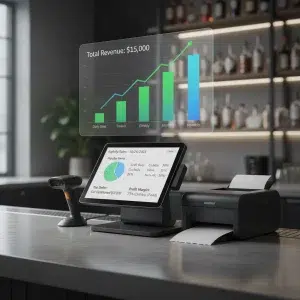
Implement pour standards and train consistently. Use a POS system that tracks by item, not just by category. Run weekly inventory counts instead of monthly. The bars that take these steps often discover they were losing 10–15% of their pour to waste before they even noticed.
Pair that discipline with smarter ordering — reviewing what actually sold versus what sat and adjusting your par levels accordingly. This directly improves bar revenue per shift without adding a single new customer.
Loyalty Programs: Getting Customers to Come Back
Acquiring a new customer costs five to seven times more than retaining an existing one. That math makes loyalty programs one of the highest-ROI investments available to bar operators. A simple points system — one point per dollar spent, redeemable for free drinks or food — can meaningfully increase visit frequency among your regulars.
Digital loyalty integrations that connect directly to your POS make this frictionless. Customers don’t carry a punch card, they just check in or scan, and the system handles the rest. Some bar loyalty programs also allow you to send targeted offers — a birthday drink, a “we miss you” discount after 30 days of no visit — that bring people back at exactly the right moment.
Digital Menu Boards: The Revenue Tool Most Bars Underuse
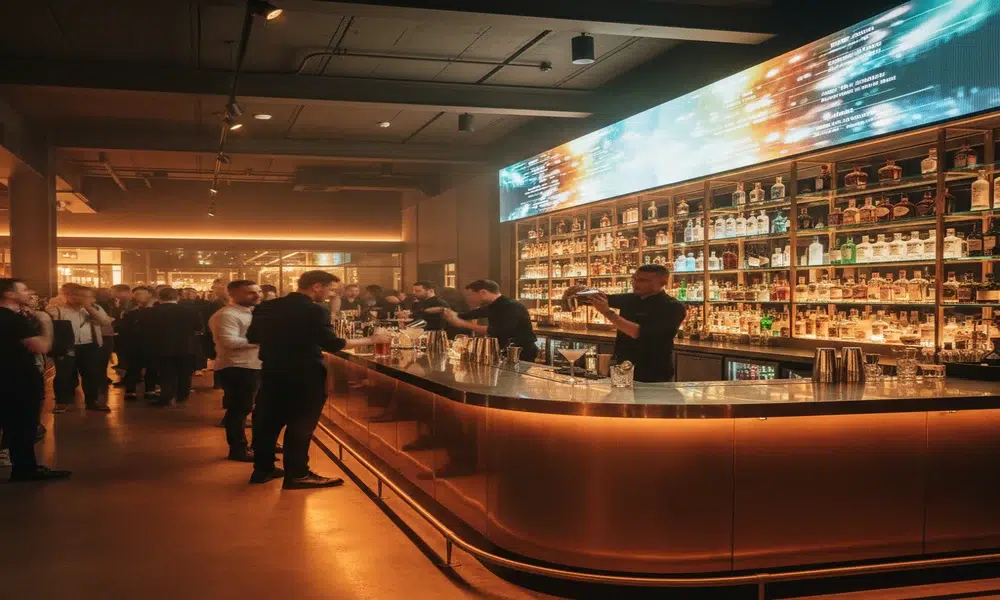
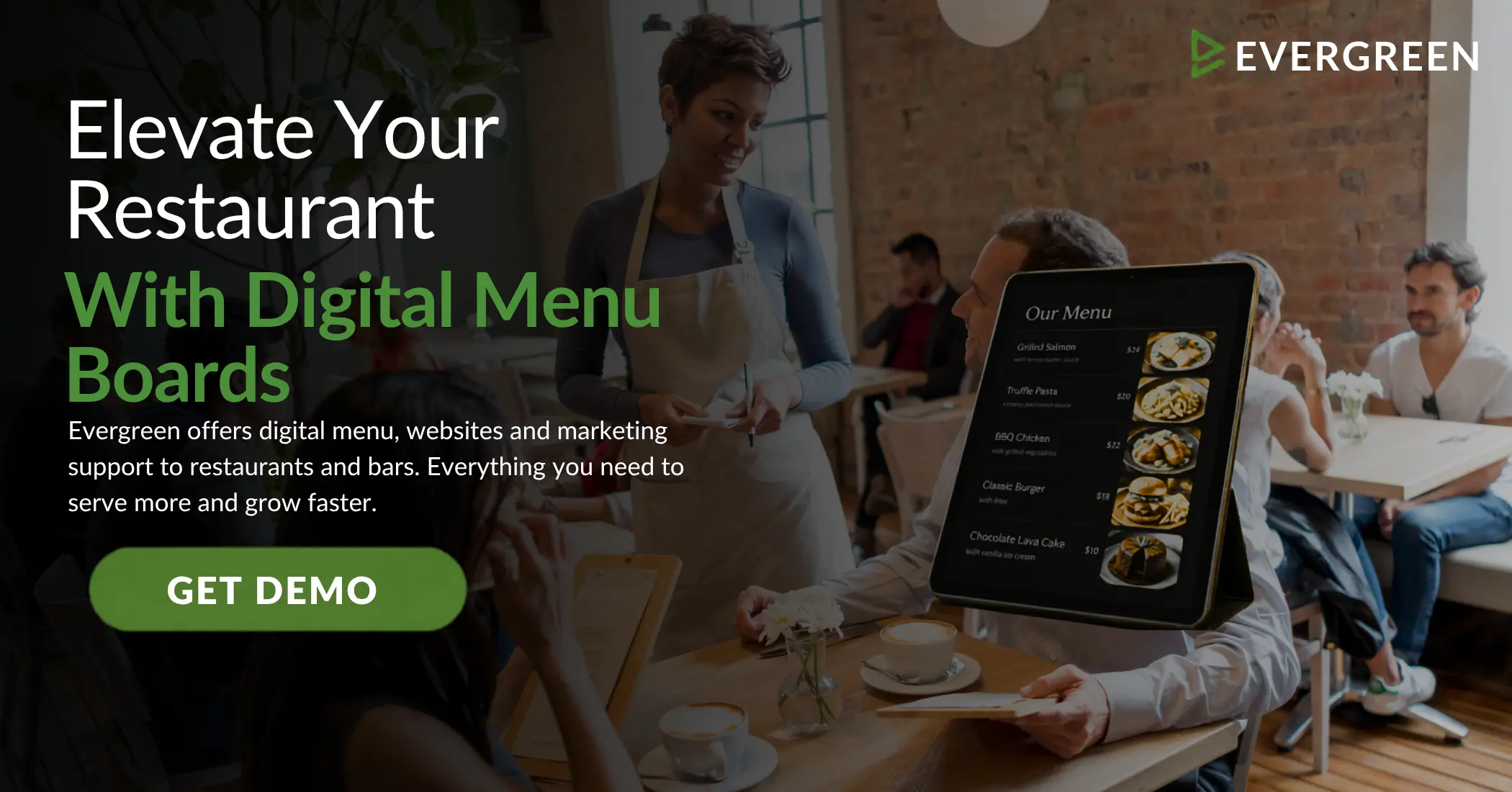
If you’re still running a chalkboard or a static printed menu, you’re leaving money on the table every single night. Digital menu boards aren’t just a visual upgrade — they’re an active sales tool that works the room while your staff is busy.
Here’s what a well-designed digital menu does for bar revenue:
- Highlights specials dynamically — customers see the deal before they order
- Reduces perceived wait time — people browse the menu while they wait
- Promotes add-ons and premium options passively at every table visit
- Updates in seconds — no reprinting cost for seasonal changes or price adjustments
- Shows real-time countdowns for happy hour to drive urgency
The Evergreen platform is built specifically for bars and restaurants — letting operators control their menu displays from anywhere, schedule promotional content, and push updates across multiple locations instantly. It’s one of the few tools that directly impacts how to increase bar revenue every single shift without requiring staff training or process changes.
Pricing Strategy: The Levers You’re Not Pulling

Most bars set prices once and leave them for years. That’s a missed opportunity. Regular pricing reviews — even annually — can surface items that have become underpriced relative to your cost of goods or relative to what the market will bear.
A $0.50 increase on your 10 best-selling drinks across 200 covers per night is $100 per night, or roughly $36,000 per year in additional bar revenue — without serving a single additional customer. That’s not a price hike that drives people away. Done correctly, customers rarely notice incremental increases on items they’re already buying without hesitation.
Test pricing changes in low-risk ways first — run a featured version of a drink at a premium price point and see how it performs before changing the standard menu across the board.
Social Media and Online Presence as Revenue Drivers
Your bar’s social media presence is a direct revenue driver, not just a marketing checkbox. Posts that show real drinks, real atmosphere, and real events convert followers into customers — especially when geo-targeted to your local audience.
The bars seeing the strongest bar revenue growth from social are consistent: three to five posts per week, heavy on video (Reels and TikTok perform dramatically better than static images), and always with a clear next step — “Reserve your spot for trivia night,” “Happy hour starts at 4,” “DM us for your birthday reservation.”
Tie your social content directly to what’s on your digital menu boards. When the menu changes, the post goes out. When a new seasonal cocktail drops, it’s on the board and on the feed simultaneously. That kind of integrated promotion drives bar sales without a marketing budget.
FAQ: How to Increase Bar Revenue
| Question | Answer |
|---|---|
| What is the fastest way to increase bar revenue? | Optimizing your menu layout for high-margin items and training staff on upselling typically shows results within days. Digital menu boards that promote specials passively are also among the fastest-ROI changes. |
| How much should a bar make per night? | It varies widely by size and market, but most successful bars target $1,500–$5,000+ per night on weekends. Weeknight revenue often lags 40–60% behind without a deliberate events or promotions strategy. |
| Do happy hours actually increase revenue? | Yes — when structured correctly. The goal is to drive volume during slow periods without sacrificing margin on peak hours. Tiered or food-focused happy hours tend to perform better than blanket drink discounts. |
| How do digital menu boards help bar revenue? | They promote high-margin items passively, create urgency around specials, reduce ordering friction, and can be updated instantly — all of which contribute to higher average check sizes. |
| What bar metrics should I track to grow revenue? | Average check size per customer, revenue per seat per hour, pour cost percentage, and weekly inventory variance are the four most revealing indicators of where revenue is being gained or lost. |
Local Resources for Bar Operators
| Resource | Description |
|---|---|
| Nightclub & Bar Media | Industry publication covering bar operations, trends, and revenue strategies. |
| National Beer Wholesalers Association | Data and resources on beer market trends, useful for beverage programming decisions. |
| Toast POS — Bar Revenue Guide | Practical benchmarks and strategies from one of the industry’s leading POS providers. |
Building Bar Revenue That Compounds Over Time
The operators who consistently grow bar revenue year over year aren’t doing one thing differently — they’re doing many small things consistently. Menu engineering, staff training, digital tools, event programming, and pricing reviews all compound on each other. The bar that implements three of these strategies sees incremental gains. The one that implements all of them builds a business that’s genuinely hard to compete with.
Start with the highest-leverage change for your specific situation — whether that’s adding digital displays, restructuring your happy hour, or simply pulling your POS data and looking at it honestly. Then build from there.
Evergreen helps bars and restaurants upgrade their menu display and promotional tools without the complexity. Start a free trial or book a demo to see how digital menu boards can start driving how to increase bar revenue from day one. Call us at 1-800-555-1234 or visit our contact page.

About Casey Marte
Senior SEO & Digital Marketing Strategist, EvergreenHQ
Casey Marte is a Senior SEO & Digital Marketing Strategist at EvergreenHQ, with over 14 years of experience across content strategy, search optimization, and AI-driven marketing. She specializes in making complex digital concepts practical for the operators who need them most.
At EvergreenHQ, Casey brings a data-first mindset to everything from how your business ranks in search to how your brand shows up across platforms. Whether you are running a single taproom or a growing multi-unit restaurant group, she is focused on making sure your digital presence works as hard as your team does.