Setting up Wi-Fi in your bar or restaurant is no longer optional. Guests expect it, staff depend on it, and your digital systems — from your POS to your digital menu boards — rely on a stable, fast connection to function properly. But a poorly configured restaurant Wi-Fi setup creates real problems: slow guest connections, POS outages mid-service, security vulnerabilities, and digital signage that goes offline at the worst possible moment. This guide covers everything you need to know to set up Wi-Fi in your bar or restaurant correctly — from hardware selection to network segmentation to keeping your digital systems always online.
Table of Contents
ToggleWhy Your Bar or Restaurant Wi-Fi Setup Matters More Than You Think
A dropped Wi-Fi connection in a restaurant isn’t just an inconvenience — it’s a revenue event. Consider what relies on your restaurant Wi-Fi:
- POS system — Most modern POS systems require internet connectivity for payment processing. A dropped connection can halt card transactions entirely.
- Digital menu boards — Platforms like Evergreen use internet connectivity to push real-time updates to your screens. No Wi-Fi means no updates — and potentially stale menus showing items you can’t serve.
- Online ordering — If you’re running DoorDash, Uber Eats, or direct online ordering, every minute of downtime is a lost order.
- Guest experience — Slow or unreliable guest Wi-Fi generates negative reviews. “The Wi-Fi didn’t work” shows up in Yelp reviews more often than most operators realize.
- Staff communications — Reservation systems, scheduling apps, and manager communications all run on your network.
A properly configured bar or restaurant Wi-Fi system costs $500–$2,000 in hardware and prevents thousands of dollars in potential revenue loss and guest dissatisfaction annually.
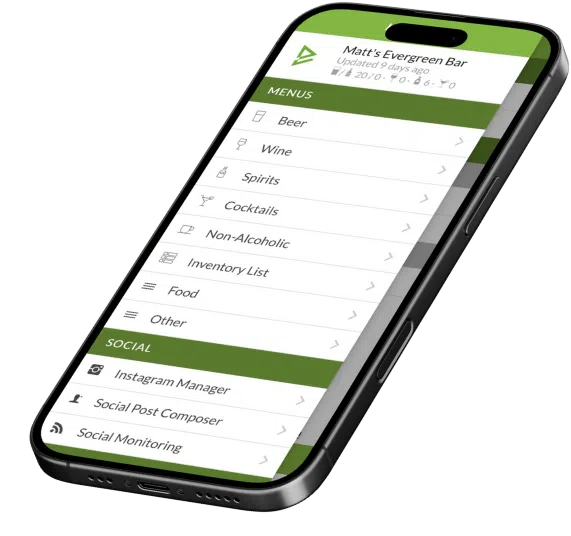
Keep Your Digital Boards Online — No Matter What
Join 4,500+ restaurants, bars, and breweries using Evergreen to modernize their menus.
How to Set Up Wi-Fi in Your Bar or Restaurant: Step by Step
Step 1: Choose the Right Internet Service Plan
Before any hardware decisions, you need adequate bandwidth. For a typical bar or restaurant, a minimum of 100 Mbps download / 20 Mbps upload is recommended. If you’re running multiple POS terminals, online ordering, digital menu boards, and guest Wi-Fi simultaneously, 200–500 Mbps is more appropriate. Always get a business-class internet plan — not residential — for reliability guarantees and faster support response times when issues arise.
Step 2: Use Commercial-Grade Hardware
Consumer routers from Best Buy are not designed for hospitality environments. You need commercial-grade access points built for high-density usage — many devices connected simultaneously across a large space. Recommended brands include:
- Ubiquiti UniFi — Industry standard for restaurants. Scalable, reliable, and cloud-managed. A UniFi setup for a typical bar runs $400–$800 in hardware.
- Cisco Meraki — Enterprise-grade with excellent remote management. Higher cost but exceptional reliability.
- Aruba (HPE) — Strong option for mid-size to large venues with complex layouts.
Step 3: Segment Your Networks
This is the most important and most overlooked step in restaurant Wi-Fi setup. Run at minimum three separate networks:
- Operations network (private) — POS terminals, digital menu boards, kitchen displays, and management devices. Never expose this to guests.
- Management network (private) — Laptops, phones, and tablets used to manage your systems. Separate from POS for security.
- Guest network (public) — Guest Wi-Fi, isolated from your operations network entirely. Guests can’t see or access your business systems.
Step 4: Place Access Points Strategically
Dead zones kill guest experience and create reliability issues for your operational systems. Place access points to ensure full coverage of your dining room, bar area, patio, and kitchen. For most bars and restaurants, one access point per 1,500–2,500 square feet of coverage area is the right starting point — adjust based on wall construction and interference sources.
Step 5: Set Up a Captive Portal for Guest Wi-Fi
A captive portal requires guests to accept your terms of service and optionally enter their email before accessing your guest network. This gives you a compliant, documented consent record and — critically — a growing email list for marketing. Many operators collect 20–50 new email addresses per week through their guest Wi-Fi portal alone.
Keeping Your Digital Menu Boards Online With Reliable Wi-Fi
Your digital menu boards are only as reliable as your network. Here’s how to ensure your restaurant Wi-Fi keeps your digital signage always online:
| Risk | Solution |
|---|---|
| Internet outage | Use a platform with local caching — Evergreen serves the last known menu even if internet goes down |
| Slow network speeds | Prioritize your operations network on your router’s QoS settings — business systems get bandwidth priority over guest Wi-Fi |
| Dead zones | Add access points — a second UniFi AP costs $100–$150 and eliminates dead zones in most spaces |
| Hardware conflicts | Use dedicated media players (not smart TVs) for your digital menu boards — they’re more reliable on commercial networks |
According to Toast’s Restaurant Success Report, network-related POS and digital system outages cost the average restaurant $500–$1,500 in lost sales per incident. Proper Wi-Fi setup is the single most cost-effective way to prevent that loss.
4,500+ Bars and Restaurants Run on Evergreen
Join 4,500+ restaurants, bars, and breweries using Evergreen to modernize their menus.
Frequently Asked Questions About Wi-Fi in Bars and Restaurants
| Question | Answer |
|---|---|
| How much internet speed does a restaurant need? | Minimum 100 Mbps down / 20 Mbps up for most operations. Busier venues with multiple POS terminals and digital boards need 200–500 Mbps. |
| What Wi-Fi hardware is best for restaurants? | Ubiquiti UniFi is the industry standard — commercial-grade, scalable, cloud-managed, and priced for independent operators. |
| Should I separate guest and business Wi-Fi? | Absolutely — always run separate networks for operations (POS, digital menus) and guests. Never let guests access your business network. |
| Will my digital menu boards work if the internet goes down? | Evergreen caches your menu locally so boards continue displaying even during an internet outage. Updates resume automatically when connectivity returns. |
| How do I collect emails through guest Wi-Fi? | Set up a captive portal on your guest network. Guests enter their email to connect — you get a growing marketing list automatically. |
| How much does restaurant Wi-Fi setup cost? | $500–$2,000 for commercial hardware (UniFi setup). Professional installation adds $200–$500. Business internet plans run $80–$200/month. |
Get Your Bar or Restaurant Wi-Fi Right — The First Time
A properly configured restaurant Wi-Fi network is the foundation your entire digital operation runs on — your POS, your online ordering, your digital menu boards, and your guest experience. Get it right once and it runs reliably for years. And when your network is solid, Evergreen’s digital menu software ensures every update hits every board instantly — from your phone, from anywhere. Join 4,500+ operators running smarter digital operations. Start your free trial today.
About Evergreen
Evergreen is digital menu software built for bars, restaurants, and breweries. Since 2010, Evergreen has helped 4,500+ operators manage their digital menu boards, website menus, and print menus from a single platform — reliably, in real time, from any device.