How to Increase Bar Revenue: Proven Strategies to Maximize Profitability in 2026
How to increase bar revenue is one of the most pressing challenges bar owners face in today’s competitive hospitality market. Whether you’re running a neighborhood pub, upscale cocktail bar, or sports tavern, increasing profitability requires a combination of smart operations, customer experience optimization, and data-driven pricing strategies. This guide breaks down the most effective methods to boost your bottom line without compromising quality or service.
Revenue growth for bars isn’t just about serving more drinks—it’s about maximizing every transaction, reducing waste, improving staff efficiency, and creating experiences customers can’t find elsewhere. The bars that thrive in 2026 are those that leverage technology like digital menu boards, understand their cost margins on every item, and actively work to increase average customer spend. Research shows that bars implementing strategic pricing changes and inventory optimization see revenue increases of 15–30% within six months.
This comprehensive guide covers actionable strategies to increase bar revenue immediately, from menu engineering and dynamic pricing to staff training and customer retention. You’ll learn how successful bars are using technology, psychology, and operational excellence to turn a good bar into a highly profitable one.
Optimize Your Menu and Pricing Strategy
Your menu is the single most important driver of revenue per customer. Many bar owners keep the same menu and pricing for years, leaving money on the table. Start by analyzing which drinks drive the highest profit margins.
Price your signature cocktails higher than simple drinks. A classic margarita costs you maybe $2 in ingredients but can command $12–15. Your high-margin cocktails should take up prime real estate on your menu. Use your digital menu board to highlight these premium drinks with enticing descriptions and pricing that reflects their value.
Eliminate unprofitable items entirely. If a drink has a margin below 60%, consider removing it or raising the price. Customers won’t notice—they’re deciding based on appeal, not absolute cost. Test price increases on new menu items; customers are more forgiving of higher prices when items are new.
Group your menu by category (Signature Cocktails, Classics, Beer, Wine, Shots) and use visual hierarchy to draw attention to your profit heroes. This simple reorganization can shift customer ordering patterns dramatically and increase bar revenue by 8–12% without adding complexity.
Leverage Digital Menu Boards to Drive Sales
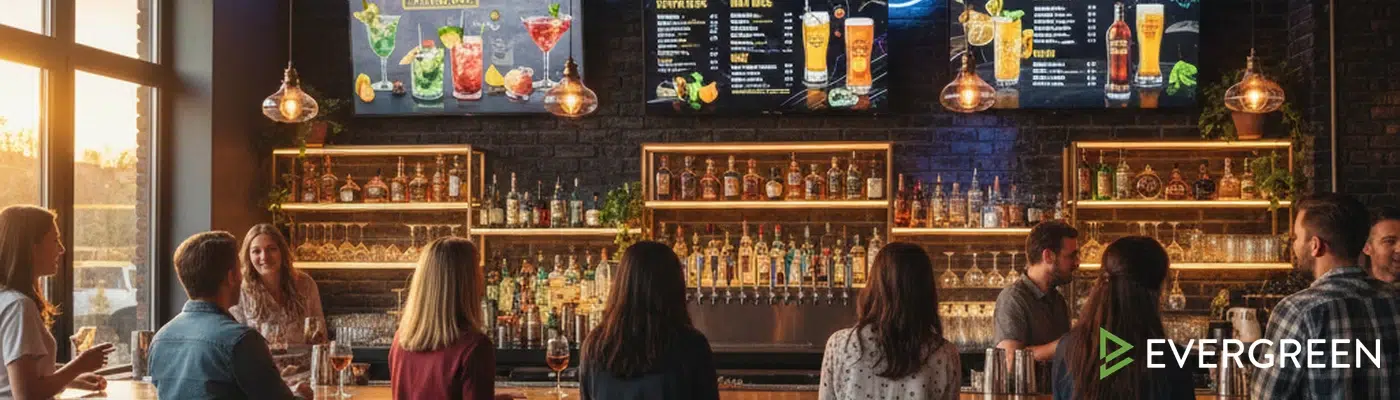
Static printed menus are passive. Digital menu boards allow you to actively upsell and change pricing in real time. Display your best-sellers, highlight premium items, and feature limited-time specials that create urgency.
Update your menu every two to three hours to reflect inventory, rush patterns, and customer demand. Run specials during slow hours to drive traffic and spike revenue during off-peak times. Evening specials on premium cocktails during the 4–6 PM window have proven to increase early-hour revenue significantly.
Use color and lighting to draw eyes to high-margin items. Your most profitable cocktails should be visually dominant on the board. This psychological nudge influences ordering patterns without being obvious. Bar owners using digital boards report a 12–18% increase in cocktail sales compared to static menus.
Implement Dynamic Pricing and Revenue Management
Airlines and hotels use dynamic pricing to maximize revenue—bars should too. Charge higher prices during peak hours (9 PM–midnight Friday/Saturday) and offer discounts during slow times (3–5 PM Tuesday–Thursday).
Create tiered happy hours. Instead of a blanket 50% discount on all drinks, offer $2 off cocktails from 4–5 PM and $1 off from 5–6 PM. This way, price-sensitive customers come at 4 PM, and more willing-to-pay customers come at 5 PM. You’re capturing both segments at higher average prices.
Use your point-of-sale system to track which times drive the most revenue and adjust staffing accordingly. When you know 40% of your weekly revenue happens Friday 9 PM–midnight, you schedule your best bartenders then and run premium pricing strategies during that window.
Reduce Waste and Control Costs Ruthlessly
Revenue and profit are different. You could sell more drinks but lose money if waste and overpouring drain your margins. Every $100 in inventory that walks out your door is revenue you’ll never capture.
Implement portion control. Train all bartenders to pour consistent measures. One bartender over-pouring by 0.5 oz on 200 drinks per week costs you $300–500 monthly. With multiple bartenders, sloppy pouring can cost thousands monthly and directly reduces your ability to increase bar revenue.
Audit your inventory weekly. Use a bar management system or simple spreadsheet to track beer kegs, bottle counts, and par levels. Identify theft, waste, and slow-moving inventory. The bars that make the most profit track inventory obsessively.
Build a Loyalty Program That Actually Works
Loyalty programs drive repeat visits and increase lifetime customer value. Customers who visit weekly spend 3–4x more per year than sporadic visitors.
Implement a simple punch-card system or mobile app that rewards repeat customers. Offer a free drink after 10 visits, not after 15. Make the threshold easy to hit so customers stay engaged. You’re not losing money on the free drink—you’re earning $120+ from the visits it takes to earn it.
Segment your customers. Your top 20% of regulars likely generate 50%+ of your revenue. Recognize these customers by name, remember their drink preference, and surprise them with occasional free drinks or exclusive specials. This personal touch drives loyalty better than any discount.
Cross-Sell and Upsell Like a Pro
The average bar customer orders one or two drinks and maybe snacks. Train your staff to cross-sell appetizers, premium spirits, and higher-priced drinks naturally.
When a customer orders a beer, suggest pairing it with food. When they order a well drink, mention a premium craft cocktail they might enjoy. When they close out, ask if they want to add an appetizer or split a bottle instead of individual drinks. These small prompts increase average transaction value by 15–25%.
Build combo deals. “Get a cocktail and appetizer for $20” feels like a deal and increases both drink and food sales. When customers see bundled pricing, they spend more freely than when pricing is à la carte.
Optimize Your Staff and Service Efficiency
Labor is typically 25–35% of bar revenue. Poorly trained or inefficient bartenders kill profitability. Train your team on upselling, speed, and accuracy to improve revenue per shift.
Schedule staff based on historical demand patterns. You don’t need full staffing at 3 PM on Tuesday. Use data to schedule efficiently and reduce labor costs while maintaining service quality during peak hours.
Incentivize sales. Pay your bartenders commission or bonuses based on daily sales targets, not just hourly wages. A bartender earning an extra $30 for hitting a $2,000 shift target will upsell aggressively and drive higher transaction values.
Create Events and Themed Nights to Boost Traffic
Bars that run the same operation day after day plateau. Create reasons for people to come in on slow nights.
Run trivia nights, karaoke, live music, sports viewing parties, or themed cocktail competitions. These draw crowds on Tuesday–Thursday when you’d otherwise be slow. More traffic means higher total revenue, even if margins are slightly lower during promotional events.
Partner with other local businesses for cross-promotion. Give flyers to restaurants down the street directing diners to your bar for after-dinner drinks. This builds traffic from new customer segments.
Leverage Social Media and Email for Regular Customer Acquisition
Digital marketing costs almost nothing compared to traditional advertising. Use Instagram, TikTok, and email to tell customers about new menu items, special events, and limited-time drink launches.
Post photos of your best-looking cocktails. User-generated content of customers enjoying drinks is your most effective marketing. Create a hashtag and repost customer photos—this builds community and drives word-of-mouth.
Email customers about exclusive specials. A Monday email highlighting “Tuesday Night Margarita Special $6” drives incremental traffic you wouldn’t get otherwise. Email is free and has a direct ROI.
Frequently Asked Questions About Increasing Bar Revenue
| Question | Answer |
|---|---|
| What’s the fastest way to increase bar revenue? | Price optimization on high-margin drinks combined with staff upselling training. Many bar owners see 10–15% revenue increases within 30 days. |
| How much should I raise prices? | Test 10–15% increases on premium cocktails and new items first. Customers are less sensitive to price increases on drinks they perceive as premium. |
| What role does technology play in bar revenue growth? | Digital menu boards, POS systems, and loyalty apps help with upselling, inventory control, and customer data. These are multipliers—they amplify existing strategies. |
| How do I know which drinks to push? | Analyze your POS data. Look for high-margin items with moderate sales volume. These are your revenue heroes—promote them aggressively. |
| Should I run happy hours? | Yes, but be strategic. Use happy hours to shift traffic to slow periods, not to discount during already-busy times. A 4–5 PM weekday happy hour drives revenue better than a Friday evening discount. |
| How important is staff training? | Critical. Untrained staff can’t upsell, over-pour, and create poor customer experiences. Invest 2–3 hours weekly in bartender development—the ROI is huge. |
Conclusion: Sustainable Revenue Growth for Your Bar
To truly increase bar revenue, focus on three pillars: pricing strategy (menu optimization + dynamic pricing), operational excellence (inventory control + staff training), and customer experience (loyalty programs + events). Most bar owners excel at one or two but neglect the third. Bars that master all three routinely grow revenue 20–40% year-over-year.
Start with menu optimization—it’s quick, free, and immediately profitable. Then layer in digital menu boards to amplify your efforts. Track everything with your POS system so you know what’s working. Finally, train your team relentlessly on upselling and portion control. Within six months, you’ll see measurable revenue growth and higher profitability.
Evergreen HQ digital menu board software helps bars increase revenue by making it easy to optimize pricing, promote high-margin drinks, and manage inventory in real time. The platform integrates with your POS so you can make data-driven decisions instantly. If you’re serious about increasing bar revenue in 2026, the right technology makes all the difference. Start your free trial today.

About Casey Marte
Senior Technical Content & Product Marketing Strategist
Casey Marte is a Senior SEO & Digital Marketing Strategist at EvergreenHQ. With over 14 years of experience across content strategy, search optimization, and now AI-driven marketing, she specializes in making complex digital concepts practical for the operators who need them most.
At EvergreenHQ, Casey brings a data-first mindset to everything from how your business ranks in search to how your brand shows up across platforms. Whether you’re running a single taproom or a growing multi-unit restaurant group, she’s focused on making sure your digital presence works as hard as your team does.