Running a successful bar takes more than good drinks and a busy Friday night. The bars that last are the ones that run lean operations, build loyal regulars, and adapt their menus and marketing faster than the competition. These seven tips for running a successful bar come from real patterns we see across thousands of operators — from single-location taprooms to multi-unit restaurant groups. Some are operational, some are about marketing, and some are about the technology that ties it all together.
1. Train Your Staff
An educated staff is essential to running a successful bar. Guests who ask what’s on tap, what’s in a cocktail, or what you’d recommend expect a confident answer — not a shrug. Make your location stand out by running regular staff tastings, distributing tasting notes on new additions, and using push notifications so your team knows what’s changed before their shift starts. With Evergreen, staff get real-time updates to the beer and cocktail list the moment anything changes.
2. Create a Signature Drink
A signature drink gives your bar an identity — and it’s one of the easiest ways to support running a successful bar that stands out locally. Give guests a reason to choose your place over the bar down the street. Give it a fun, memorable name that travels well on social media. Feature it on your digital menu board prominently so it’s the first thing people see when they walk in.
3. Organize the Back Bar
You don’t want your bartenders running into each other all night and wasting time crossing the bar for every pour. Put beer glassware next to the tap handles. Station your most-used spirits within arm’s reach. Watch your staff for a full shift before reorganizing — you’ll see the friction points clearly. A well-organized back bar speeds up service and reduces errors, two things central to running a successful bar efficiently.
4. Market Your Drink Specials
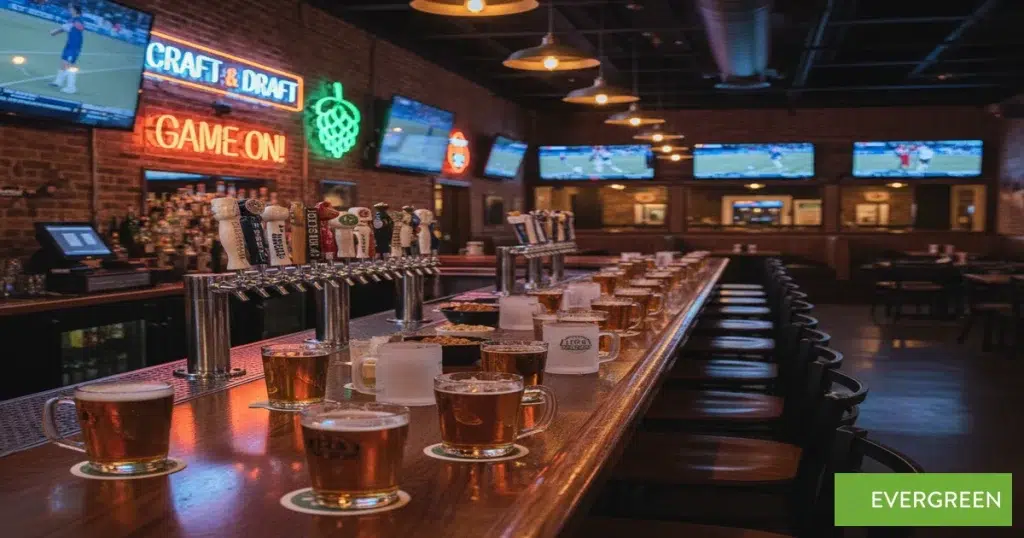
Running a successful bar means making sure guests know what you’re offering before they walk past your door. Post specials on social media the same day they run. Use your digital menu boards to rotate promotions throughout the day. Happy hour pricing that nobody knows about is wasted margin. Evergreen’s tools let you promote events and specials in real time — across your bar management ecosystem and on your displays simultaneously.
5. Use a POS System
A busy night with heavy volume requires a system that keeps orders organized and transactions accurate. Once you have a solid POS system in place, you’ll wonder how you operated without one. Create a button for your signature drink and track its sales week over week. Use the data to identify your highest-margin items and put them front and center on your menu. This is core to running a successful bar with real visibility into what’s actually making you money.
6. Keep an Eye on Pour Levels
Inaccurate pouring is one of the fastest ways to lose money at a bar. When bartenders pour differently every time, your pour cost climbs without a corresponding increase in revenue — and the guest experience becomes inconsistent. Train to a standard. Use jiggers where appropriate. Companies like Bevinco specialize in auditing bars to decrease losses and improve inventory accuracy. Consistent pours are a quiet foundation of running a successful bar profitably.
7. Change the Drink Menu Frequently
Rotating your menu is one of the most effective strategies for running a successful bar that keeps guests coming back. Switch up the beers on tap to match your customers’ varied tastes and the season. Cut items that aren’t selling. Give your bartenders room to be creative — a rotating cocktail section signals that your bar is alive, not static. Use your beer list tools to notify regulars the moment their favorite returns to tap.
What Separates Good Bars From Great Ones
The bars that consistently outperform their competition treat every shift as a system. Running a successful bar long-term requires tight cost control, engaged staff, and the right tools working together. A multi-location bar group that had struggled with menu inconsistency across sites found that centralizing updates through a digital menu platform brought immediate alignment. Staff walked in knowing what was on tap and what to push. That operational confidence translated directly into fewer guest complaints and higher upsell rates — a clear example of how running a successful bar comes down to giving your team the right information at the right time.
Track Pour Cost Weekly
Bar profitability depends on tracking pour cost, waste, and labor weekly — not monthly. Set a target (18–24% for beer, 15–20% for spirits) and compare actuals every seven days. The National Restaurant Association Educational Foundation consistently identifies cost control as the top differentiator between profitable and unprofitable bar operators.
Build a Loyalty Loop
Regulars are the backbone of any bar. A loyalty program — even a simple digital punch system — drives repeat visits and turns occasional guests into advocates. Consistent experiences plus tangible rewards make returning feel worthwhile. See how loyalty programs drive repeat business for bars and restaurants at every scale.
Protect Your Online Reputation
Most guests check reviews before walking in. Running a successful bar means actively managing your digital presence — responding to every review, keeping hours current, and maintaining accurate listings. The Alcohol and Tobacco Tax and Trade Bureau also publishes compliance resources that help bars avoid regulatory disruptions that can damage reputation overnight.
Frequently Asked Questions — Running a Successful Bar
| Question | Answer |
|---|---|
| What is a healthy pour cost for a bar? | Target 18–24% for beer and 15–20% for spirits. Track weekly against this benchmark to catch variance before it compounds into real losses. |
| How often should a bar update its menu? | Seasonally at minimum, and in real time when tap lists or specials change. Digital menu boards make frequent updates fast and practical. |
| What technology matters most for running a successful bar? | A reliable POS system and digital menu boards. Together they reduce errors, surface useful sales data, and streamline every shift. |
| How do I increase bar revenue without more foot traffic? | Focus on average ticket size — train staff to upsell confidently, feature high-margin items on your menu board, and use loyalty programs to increase visit frequency. |
| Is running a bar profitable? | Yes, when managed with tight cost controls and consistent operations. The most profitable bars treat every operational detail — from pour levels to menu pricing — as a lever. |
Make Running a Successful Bar Your Competitive Advantage
Running a successful bar is a discipline, not just a talent. The operators who win long-term treat every shift as a system to optimize, every menu as a sales tool, and every guest interaction as an opportunity to build loyalty. Evergreen gives bars and restaurants the platform to update menus in real time, keep staff aligned, and deliver a consistently great experience — every night, not just the busy ones.

About Casey Marte
Senior Technical Content & Product Marketing Strategist
Casey Marte is a Senior SEO & Digital Marketing Strategist at EvergreenHQ. With over 14 years of experience across content strategy, search optimization, and now AI-driven marketing, she specializes in making complex digital concepts practical for the operators who need them most.
At EvergreenHQ, Casey brings a data-first mindset to everything from how your business ranks in search to how your brand shows up across platforms. Whether you’re running a single taproom or a growing multi-unit restaurant group, she’s focused on making sure your digital presence works as hard as your team does.